


UN Emergency Fund Drives Lifesaving Aid Amid Humanitarian Crises
Contributions to the UN Central Emergency Response Fund (CERF) continue to save lives in the face of growing global humanitarian crises, UN Secretary-General António Guterres emphasized during a high-level pledging event. In a video message, Guterres called on Member States to “dig deeper” and urged new donors to step up, aiming to achieve CERF’s $1 billion annual target for 2025.
Supporting Vulnerable Communities Worldwide
Established in 2005 by the UN General Assembly, CERF plays a pivotal role in providing rapid and flexible humanitarian funding during conflicts, climate-related disasters, and other emergencies. The fund also invests in anticipatory actions to mitigate the worst impacts of crises. Since its inception, CERF has allocated over $9 billion to assist people in more than 100 countries and territories.
One example of CERF’s critical work is in Lebanon, where it partners with the UN refugee agency UNHCR to help displaced families find shelter and protection. Among these beneficiaries is Aya Farhat, a young girl from Braachit, whose family was forced to relocate multiple times due to recent hostilities. “Now we have found a better room where we can stay, and I am very happy,” Aya shared in a video played at the event. “Thankfully, I am with my family, and no one has been separated or lost.”
‘A UN Success Story’
Describing CERF as a “UN success story,” the Secretary-General praised its effectiveness and unique role in humanitarian crises. “CERF is a first responder in crises – rooted in rapid analysis, rapid decision-making, and rapid implementation. It focuses on putting people first and kick-starting relief as quickly as possible,” he said.
Guterres highlighted that more than 60 recipient countries have also become donors over the years but stressed that more support is essential. “As humanitarian needs soar, contributions are failing to keep pace. The need for a fully funded CERF – at $1 billion – has never been greater,” he urged.
Addressing Critical Humanitarian Needs
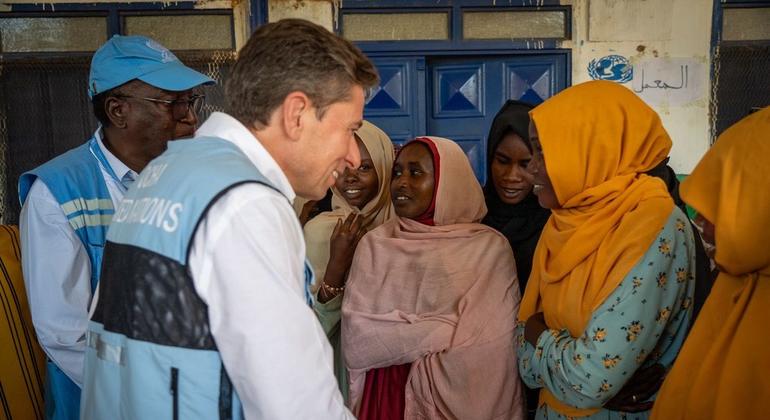
UN Humanitarian Coordinator Tom Fletcher echoed the call for increased support, noting that humanitarians are seeking $47 billion to assist 190 million people across 72 countries in 2025. “CERF is absolutely vital to these efforts,” Fletcher said, sharing experiences from his recent visits to Sudan and Chad. In Chad alone, more than half a million people have fled ongoing conflict in Sudan.
“I witnessed extraordinary generosity from host communities and saw humanitarians working with courage, ingenuity, and expertise. CERF provides a critical boost to the humanitarian response,” Fletcher said. He emphasized that CERF’s impact goes beyond funding, as it drives innovation and sets a standard for effective humanitarian action.
Fast, Flexible, and Innovative Aid
CERF’s speed and adaptability were highlighted as key attributes. Fletcher noted that CERF released funds within hours of a flash appeal following hostilities in Lebanon in September. Additionally, the fund allocated $200 million this year to neglected crises in 17 countries, supporting local responders and vulnerable populations. For instance, in the Democratic Republic of the Congo (DRC), CERF provided critical support for survivors of gender-based violence.
Innovation also lies at the heart of CERF’s operations. Through its new Climate Action Account, CERF allocated $10 million to nine countries, enabling communities to build resilience against climate shocks. Projects included constructing flood-resistant vegetable gardens and installing solar-powered water pumps. Moreover, CERF expanded anticipatory actions, deploying $3.4 million to Nepal within six minutes of flood warnings in September, helping communities prepare and saving countless lives.
“As Guterres noted, CERF is not just a UN success story but a triumph for the entire humanitarian movement,” Fletcher told Member States. “But imagine what more we could achieve together if CERF was fully funded.”
$349 Million in Pledges Announced
At the pledging event, 44 donors committed $349 million for CERF for 2025, with additional contributions expected in the coming months, according to the UN Office for the Coordination of Humanitarian Affairs (OCHA). However, this figure reflects a 17% decrease from last year’s $419 million pledges, signaling a challenging funding outlook for 2025.
“Donor commitments are falling short at a time when humanitarian needs are greater than ever,” OCHA noted in a press release. Despite the shortfall, leaders at the event emphasized the ongoing importance of CERF in delivering life-saving aid to millions worldwide.






Leave a Reply