


To properly accommodate international trains from London, stations require costly manned passport control, security checks, and a dedicated platform separated by an effective international border. International and domestic passengers must remain separate, which also makes serving other UK destinations beyond London commercially nonviable.
Piling in
Despite these obstacles, the London route is considered so profitable that companies are eager to join. Gemini Trains aims to operate 11 trains daily through the Tunnel by 2030, even after being denied space at the Temple Mills depot. As of August 2026, Gemini plans to establish its own depot in Kent at the unused Chart Leacon facility.
The company has a partnership with Uber but lacks trains, track access, and a depot. If it launches its intended services, the total number of cross-Channel return services would increase to 66 daily.
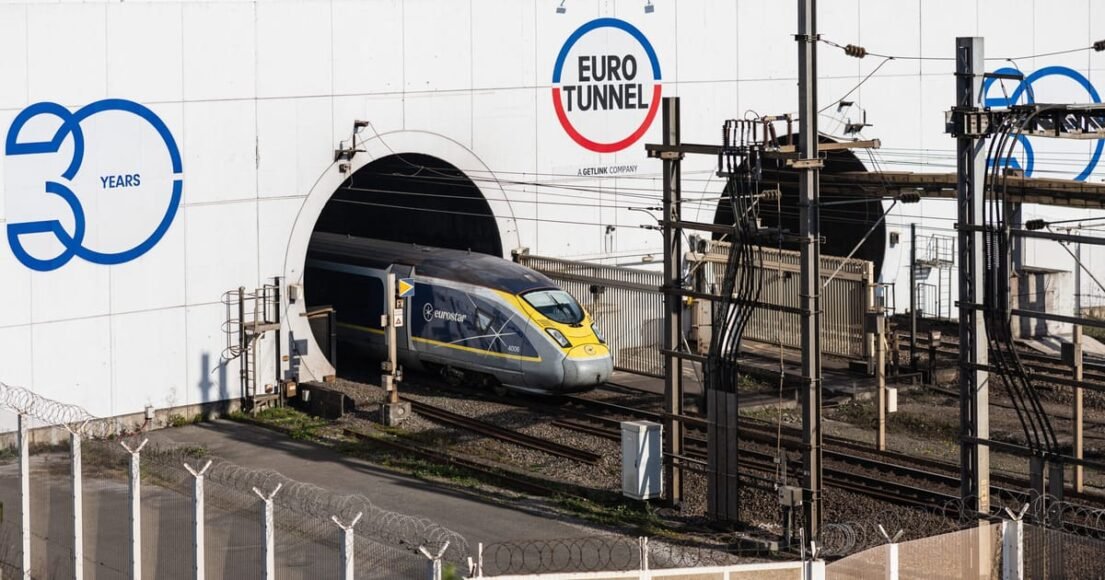
Eurostar also announced its intent to grow, with a €2 billion (£1.7 billion) investment in up to 50 new train sets to be delivered in the early 2030s, enabling a 30 percent increase in their services and expansion to destinations like Frankfurt and Geneva.
The UK-side high-speed line has ample capacity for these plans, built for eight international trains an hour. However, realizing these ambitions depends on securing paths in France, Belgium, and beyond.
A major limitation will be passenger capacity at stations. London St Pancras’ international terminal often lacks seating after passport control. The station owner has engaged architects HawkinsBrown to double passenger capacity by 2028, with further expansions in the 2030s. St Pancras has limited expansion space, being bordered by King’s Cross station, the British Library, and a canal.
Last month, Eurostar CEO Gwendoline Cazenave stated the UK needed “a bold vision to match the private investment on the table,” urging for “more depot capacity, a bold expansion of St Pancras, and a seamless border.”










Leave a Reply