



“Inflation has decreased more rapidly than anticipated, but the ongoing conflict in the Middle East continues to result in high and volatile energy prices,” stated BoE Governor Andrew Bailey.
In the U.K. and EU, the U.S.-Iran temporary ceasefire has given policymakers hope that the conflict’s impact could be short-lived. There are signs of economic resilience, with lower services and food inflation, slowing wage growth, and a soft labor market.
The European Central Bank was the first major central bank to raise rates in June to ensure price stability, but paused in July after eurozone inflation was lower than expected last month. The U.K. also experienced a drop in inflation in June — to 2.6 percent — before the conflict re-escalated.
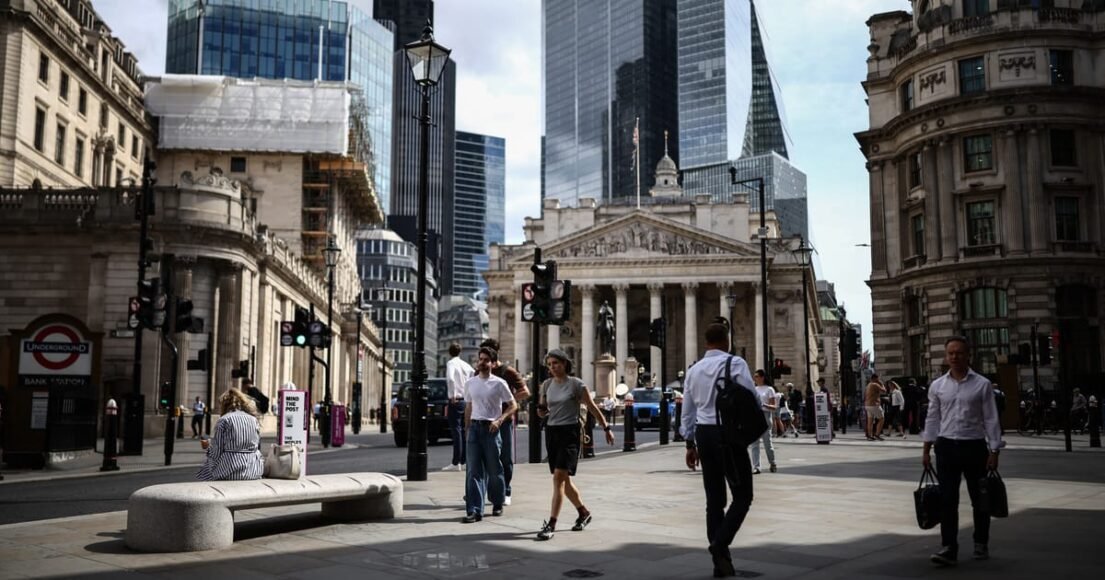
However, with Britain expected to suffer the largest economic impact of any major country from the Iran war, the future appears highly uncertain, according to the central bank’s projections, and will depend on how far energy prices are affected by the intermittent nature of the war.
“The U.K. is an open economy, so we are obviously influenced by global conditions, particularly now, considering what’s occurring worldwide and especially the conflict in the Gulf,” Bailey told journalists in a press conference following the MPC decision.
The central bank modeled several scenarios to evaluate the potential impact of the ongoing war. In a negative scenario, where the conflict re-escalates repeatedly, prices could become entrenched throughout the economy, with inflation peaking at 4.5 percent in the second quarter of 2027.






Leave a Reply