Who Oversees Human Rights Violations?

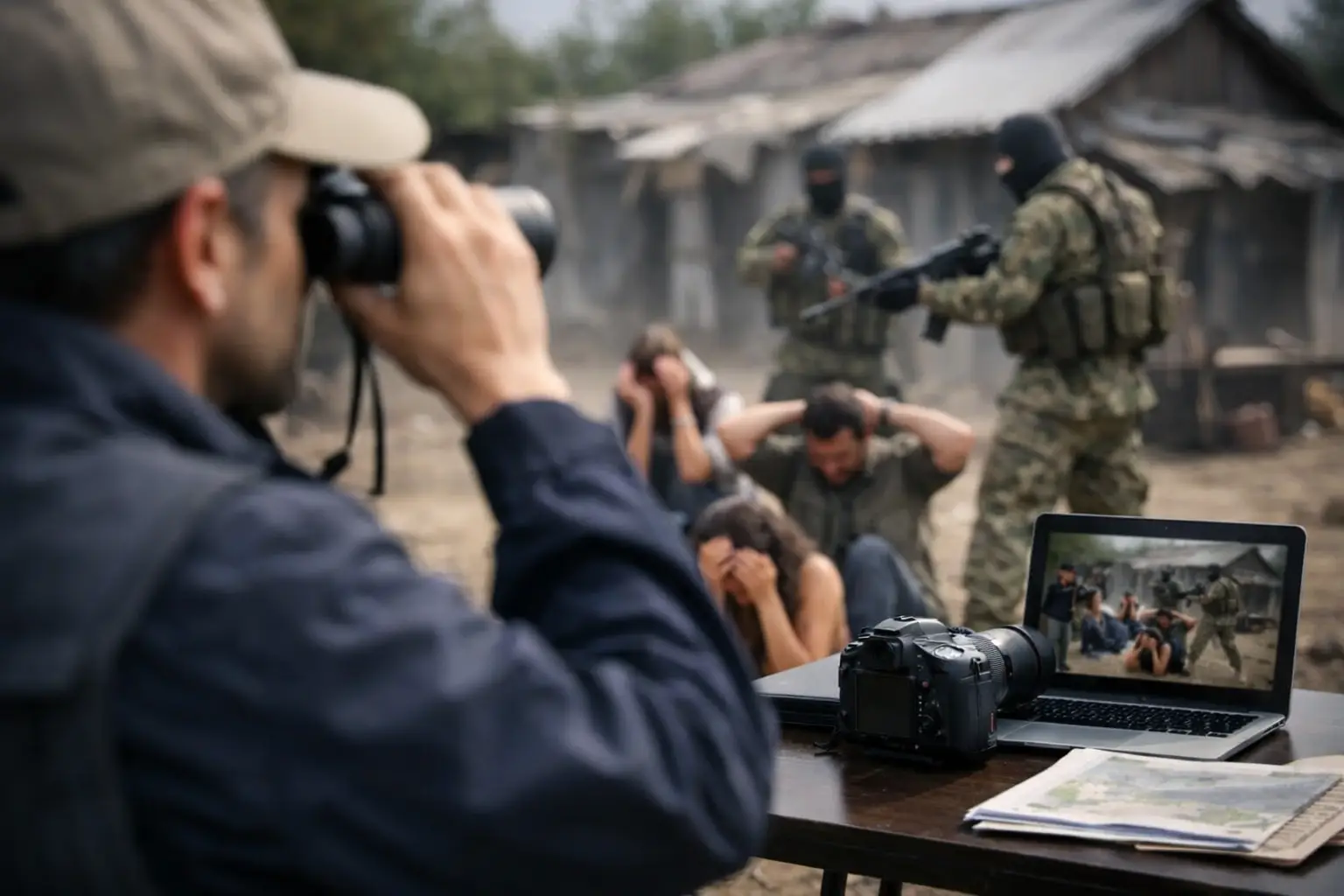
When governments imprison dissidents, militias attack civilians, or minority faith groups are silenced, the primary public question often is: who monitors human rights abuses? The answer is crucial because scrutiny is rarely performed by a single authority. It’s part of a diverse ecosystem involving UN mechanisms, regional courts, national institutions, journalists, civil society groups, and increasingly, open-source investigators.

This fragmentation is both a strength and a weakness. It allows evidence to emerge through different channels when one is obstructed. However, it also results in uneven, slow accountability, often susceptible to political influence.

Who monitors human rights abuses at the international level?

The United Nations serves as the most prominent international monitoring body, yet it isn’t a unified enforcement entity with police powers. Various UN segments oversee different abuses, and their impact largely depends on access, state cooperation, and ongoing diplomatic pressure.

The Office of the UN High Commissioner for Human Rights is central in documenting violations, supporting fact-finding missions, and briefing member states. Its teams may monitor arbitrary detention, torture, attacks on journalists, discrimination, religious persecution, or abuses in armed conflicts. In certain crises, the Human Rights Council establishes commissions of inquiry or fact-finding missions to gather evidence and discern abuse patterns.

UN special rapporteurs and working groups, comprising independent experts, focus on specific themes like freedom of religion, torture, violence against women, or minority issues, or concentrate on particular countries with severe concerns. Their authority is moral and institutional rather than coercive. They can request visits, send urgent communications to governments, and produce reports shaping international scrutiny but cannot force compliance.

Treaty bodies provide an additional layer. These committees monitor if states are fulfilling obligations under conventions they’ve ratified, such as those on civil and political rights, racial discrimination, or child rights. Their reviews can be rigorous but are periodic rather than continuous, leaving significant gaps in fast-moving crises.

Regional bodies often matter more than readers assume

For Europeans, regional systems often carry more weight than distant UN discussions. The Council of Europe, through the European Court of Human Rights and related mechanisms, has directly impacted cases of unlawful detention, surveillance, discrimination, prison conditions, and limitations on religion or expression.

The Court doesn’t monitor every abuse in real time and depends on cases being presented to it. But over time, its judgments create a public record of state misconduct, which can enforce legal or administrative changes. Similarly, the European Committee for the Prevention of Torture visits detention places and reports on conditions and treatment within them.

The European Union’s role is frequently overestimated. EU institutions monitor rule-of-law risks, media freedom concerns, anti-discrimination obligations, and sanctions-related evidence, funding rights-based reporting and civil society work. Yet the EU isn’t a universal human rights court. Its interventions are shaped by competence, political negotiations, and member states’ reluctance to undergo intense scrutiny of their domestic records.

Outside Europe, the Inter-American and African human rights systems perform similar roles with varying strength and consistency. Despite their importance in documenting enforced disappearances, political killings, and persecution of vulnerable communities, they often receive limited visibility in European media.

NGOs and journalists are often first to expose abuses

Many abuses become known internationally through non-governmental organizations and reporters who first document them. Human rights groups interview witnesses, preserve testimony, analyze detention patterns, track attacks on religious communities, and compare official narratives with ground evidence.

This work is vital because states accused of abuse seldom provide transparent information about their actions. Independent organizations can act faster than multilateral institutions and often take greater risks in hostile environments. They also maintain pressure on cases long after initial media attention fades.

However, not all monitoring carries equal weight. Large international NGOs might possess stronger verification procedures, legal expertise, and global reach. Smaller local groups might have deeper access, better language skills, and sharper community understanding. Credible monitoring often relies on cooperation between local documentation and international amplification.

Journalists play a parallel role. Investigative reporting has uncovered mass detention, illegal surveillance, trafficking, forced labor, war crimes

Comments

6 responses to “Who Oversees Human Rights Violations?”

  1. Gullyway Avatar
    Gullyway

    Isn’t it charming how we have a whole buffet of watchdogs for human rights violations, yet they often seem to be on a leisurely coffee break while the abuses are happening? 🤷‍♂️ Just a classic case of too many chefs in the kitchen, but no one actually cooking! 🍽️

  2. Corny Avatar

    Monitoring human rights violations? Oh, that’s a doddle! Just get a bunch of experts to send polite emails while we all play the waiting game—because nothing says “justice” like a good old-fashioned game of bureaucracy! 😂

  3. Fire Bite Avatar
    Fire Bite

    Monitoring human rights abuses? Oh, you mean the game of “pass the buck” where everyone’s watching but no one’s actually in charge? Classic European efficiency at its finest! 😏

  4. prometheus Avatar
    prometheus

    Seems like we’ve got a real human rights watchdog fest here, where everyone and their uncle is peering into the lives of the oppressed while sipping cappuccinos. 🥴 Who needs a superhero when you’ve got a buffet of NGOs, UN bureaucrats, and the occasional journalist, all trying to find their way through the bureaucratic maze like lost tourists in a foreign city? 🍷

  5. spontan8ty Avatar
    spontan8ty

    You know, it’s quite comforting to see that the issue of human rights violations is being monitored by a whole circus of organizations—because what could possibly go wrong with so many cooks in the kitchen? 😂 Makes you wonder if anyone ever thought about keeping the spotlight on the actual violations instead of just the paperwork, eh?

  6. Grabber Avatar
    Grabber

    Looks like we’ve got an entire circus of “watchdogs” keeping an eye on human rights violations—too bad none of them have the bite to actually enforce anything! 😂 It’s like hiring a bouncer who just stands at the door but never checks IDs!

  7. doll champagne Avatar
    doll champagne

    Monitoring human rights abuses? Oh, what a delightful game of “pass the buck” we have here—everyone’s watching, yet no one’s actually doing anything! 🙃 Just like my last trip to the pub: plenty of talk, but no one willing to pick up the tab. 🍻

Leave a Reply

Your email address will not be published. Required fields are marked *

Last News

Pope Leo’s Immigration Remarks Highlight America’s 250-Year Immigrant Legacy

Pope Leo’s Immigration Remarks Highlight America’s 250-Year Immigrant Legacy

Washington, D.C., July 03, 2026 – Eurotoday Newspaper — Pope Leo immigration remarks drew global attention as he praised the United States’ long tradition of welcoming immigrants during events commemorating the nation’s 250th anniversary. The Pope highlighted how generations of immigrants have helped build America’s economy, culture, and communities while encouraging compassion and respect for h

Read More

Who Oversees Human Rights Violations?

Who Oversees Human Rights Violations?

When governments imprison dissidents, militias attack civilians, or minority faith groups are silenced, the primary public question often is: who monitors human rights abuses? The answer is crucial because scrutiny is rarely performed by a single authority. It’s part of a diverse ecosystem involving UN mechanisms, regional courts, national institutions, journalists, civil society groups, an

Read More

Europe Faces Its Own Accountability Crisis

Europe Faces Its Own Accountability Crisis

The U.S. stands alone among its Western allies on this list, surpassing Poland by 25 positions in terms of impunity, while Canada, Japan, Germany, France, Britain, and Australia rank 30 to 50 spots more accountable.
The democracies America fostered now show a growing gap at their heart: the U.S. itself. Yet, presuming immunity for the rest of the West would be a mistake.
For Washington, this is no

Read More

Two Romanian Men Sentenced for Stabbing Iranian Journalist in London

Two Romanian Men Sentenced for Stabbing Iranian Journalist in London

Sarhan Basem is Eurotoday’s Senior Correspondent to the European Parliament. With a Bachelor’s degree in English Literature, Sarhan brings a unique blend of linguistic finesse and analytical prowess to his reporting. Specializing in foreign affairs, human rights, civil liberties, and security issues, he delves deep into the intricacies of global politics to provide insightful comment

Read More

10 Indicators of a Healthy Dog

10 Indicators of a Healthy Dog

It’s crucial for pet owners to ensure their dog is content, energetic, and healthy. Signs of a dog’s well-being go beyond just the absence of illness. Often, we notice when something’s wrong but can overlook the indicators that our dog feels good—through their behavior, energy, appetite, movement, and even the gloss of their coat. Observing subtle changes in daily life is vital

Read More

Von der Leyen Acknowledges ‘Technical Problems’ with New EU Airport Border Checks

Von der Leyen Acknowledges ‘Technical Problems’ with New EU Airport Border Checks

Airports and airlines have attributed the hours-long queues, operational disruptions, and missed connecting flights to the new border control system, which mandates biometric data registration for travelers from non-EU countries.
“There’s still quite a lot of work to do to have these technical issues solved together with the member states,” von der Leyen stated.
These comments represent a change i

Read More

Fiserv and BP Alert US Retailers Amid Intensified FDA Vape Enforcement

Fiserv and BP Alert US Retailers Amid Intensified FDA Vape Enforcement

Washington, D.C., July 03, 2026 – Eurotoday Newspaper — FDA vape enforcement is intensifying across the United States after Fiserv and major service station operators, including BP, warned convenience stores about the risks of selling unauthorized vaping products. The industry alert comes as regulators continue efforts to remove illegal vape devices from the retail market and encourage businesse

Read More

The Battle for Pink Gold: Norway Drills Through a Mountain

The Battle for Pink Gold: Norway Drills Through a Mountain

When a nation embarks on constructing a tunnel through a mountain to expedite ships’ journey to the sea, it’s more than an infrastructure project—it’s a reflection of the influence of a multi-billion dollar industry.
This is currently unfolding in Norway, where the world’s first ship tunnel is being built through the Stad Peninsula, allowing cargo ships to bypass some of

Read More

EU Sanctions Individuals Responsible for Alexei Navalny Poisoning

EU Sanctions Individuals Responsible for Alexei Navalny Poisoning

The European Union Council announced on Friday that it has imposed sanctions on six scientists and researchers suspected of participating in the poisoning of Russian opposition leader Alexei Navalny.
“The EU remains fully committed to countering the proliferation and use of chemical weapons,” stated the Council. The sanctions consist of an asset freeze and a travel ban to the EU.
Navalny, consider

Read More

GFL Environmental Considers Going Private Amid Buyout Interest

GFL Environmental Considers Going Private Amid Buyout Interest

Sarhan Basem is Eurotoday’s Senior Correspondent to the European Parliament. With a Bachelor’s degree in English Literature, Sarhan brings a unique blend of linguistic finesse and analytical prowess to his reporting. Specializing in foreign affairs, human rights, civil liberties, and security issues, he delves deep into the intricacies of global politics to provide insightful comment

Read More