


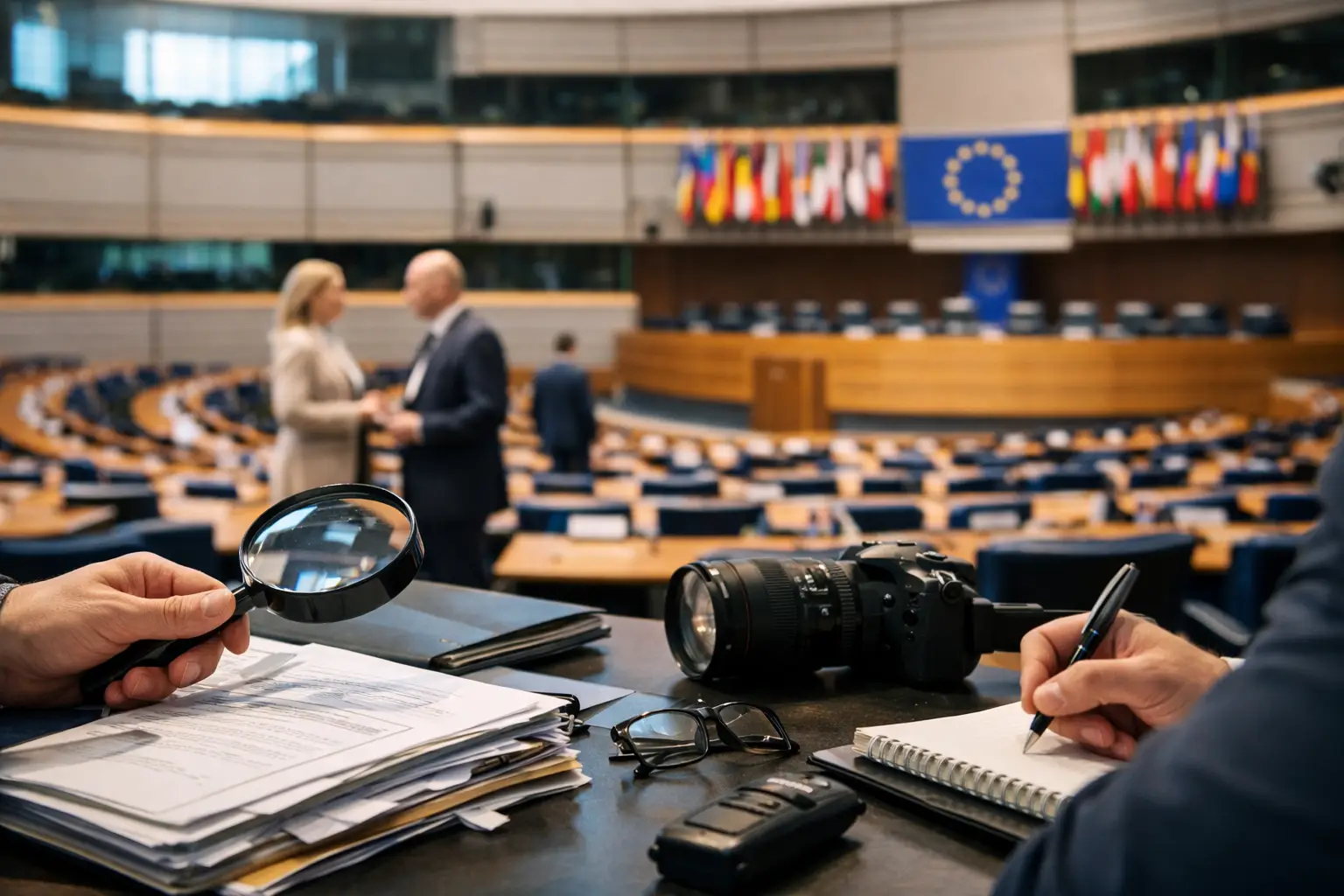
When a scandal hits Brussels, many wonder how European Parliament investigations truly operate and whether MEPs can do more than hold dramatic sessions. The answer is yes — but only to an extent. The Parliament has significant scrutiny tools, especially when issues relate to EU law, public administration, or political accountability. However, it doesn’t function like a prosecutor’s office or a national criminal court.
This distinction is crucial. Public frustration emerges when inquiries make headlines, gather testimony, and produce reports without leading to immediate arrests or sanctions. Understanding the Parliament’s capabilities involves distinguishing political investigations from judicial ones. The former is about exposure and accountability, while the latter concerns criminal liability and punishment.
European Parliament investigations operate primarily through committees. Some are permanent, with ongoing oversight roles, while others are formed for specific issues. The most powerful tool is the committee of inquiry, designed under EU treaties to investigate alleged breaches or maladministration in EU law implementation.
Though technical, the political stakes are high. If there are claims that member states or EU bodies improperly applied EU rules—such as on surveillance, transport safety, or corruption—Parliament may choose a structured scrutiny approach rather than a mere debate.
A committee of inquiry isn’t automatically formed. MEPs must rally support, reflecting how procedure and politics are inseparable. Public interest, reputational risk, or institutional value can drive an inquiry’s momentum, while fears of partisan damage or legal overreach may hinder it.
Parliament also sets up special committees for broad public concerns, even if legal thresholds for formal inquiries aren’t met. Recent examples include committees on tax practices, foreign interference, and spyware.
Once Parliament decides on an investigation, work begins with a mandate, outlining what the committee can examine, the timeframe, and the institutions involved. A narrow mandate can focus the inquiry but also limit public expectations.
The committee appoints a chair and rapporteurs, with seats distributed according to party strength, ensuring investigations remain politically balanced and legitimacy is maintained.
Committees gather information by requesting documents, inviting officials, experts, and others to hearings, sending written questions, and organizing fact-finding missions. However, Parliament cannot compel appearances like a court and faces restricted access to classified material. National governments and EU agencies may cooperate selectively, and ongoing criminal proceedings may limit testimonies.
Although “investigation” might suggest search warrants and prosecutions, Parliament’s role is political scrutiny with institutional visibility. Committees can highlight issues, establish public records, and reveal contradictions. They can identify failures in applying EU law and recommend legal reforms, oversight improvements, and referrals to other authorities.
In practice, a well-run inquiry can influence policy for years, damage careers, prompt administrative changes, and shape legislative reforms. It provides a forum for victims, campaigners, and watchdogs, offering sustained cross-border attention to buried issues.
Parliament’s powers generally stop short of direct enforcement. It cannot convict or impose penalties; it relies on bodies like national prosecutors or the European Public Prosecutor’s Office for legal steps involving corruption or criminal abuse.
Not all investigations carry the same weight. Impact depends on timing, subject matter, media pressure, and other institutions’ willingness to act. Inquiries into live scandals with solid evidence often have more significance, and cases with clear EU competence yield firmer conclusions than those primarily in national jurisdictions.
There’s a trade-off between breadth and precision. A broad special committee can map systemic abuse, while a narrower inquiry may better assign responsibility.
Committees of inquiry, bound to breaches in EU law implementation, carry constitutional weight but require negotiation. Special committees are flexible for urgent, complex, or transnational issues and avoid procedural disputes over legal admissibility.
Final reports aren’t the end. Committees usually vote on findings and recommendations, potentially calling for legislative, ethical, or transparency changes. Some reports fade quickly, while others become references in future battles, depending on the Commission’s actions, member states’ acceptance, and ongoing pressure from journalists and civil society.
While exposure isn’t enforcement, it’s essential in European governance, where responsibility is dispersed. Building a public record can be a form of power.
The strongest case for these investigations is democratic accountability. Parliament, as the EU’s directly elected institution, provides a public, transnational forum for serious allegations, making it harder to ignore than internal reviews.
Criticism arises when inquiries become partisan spectacles, with witnesses grandstanding and political groups shielding allies. Despite this risk, dismissing these investigations as mere theater would be a mistake. They connect technical EU governance with public relevance, especially for underreported issues involving rights or cross-border harm.
Readers should consider two questions for any new inquiry: What is the legal scope? Who can act on the findings? If the answers are weak, expectations should be managed. If strong, an inquiry might achieve more than just headlines.
This is the true measure of parliamentary scrutiny in Europe—not its immediate drama but whether it leaves institutions more accountable and victims less isolated.





Leave a Reply