International Scrutiny on Denmark’s Anti-Racism Plan: Insights from the UPR

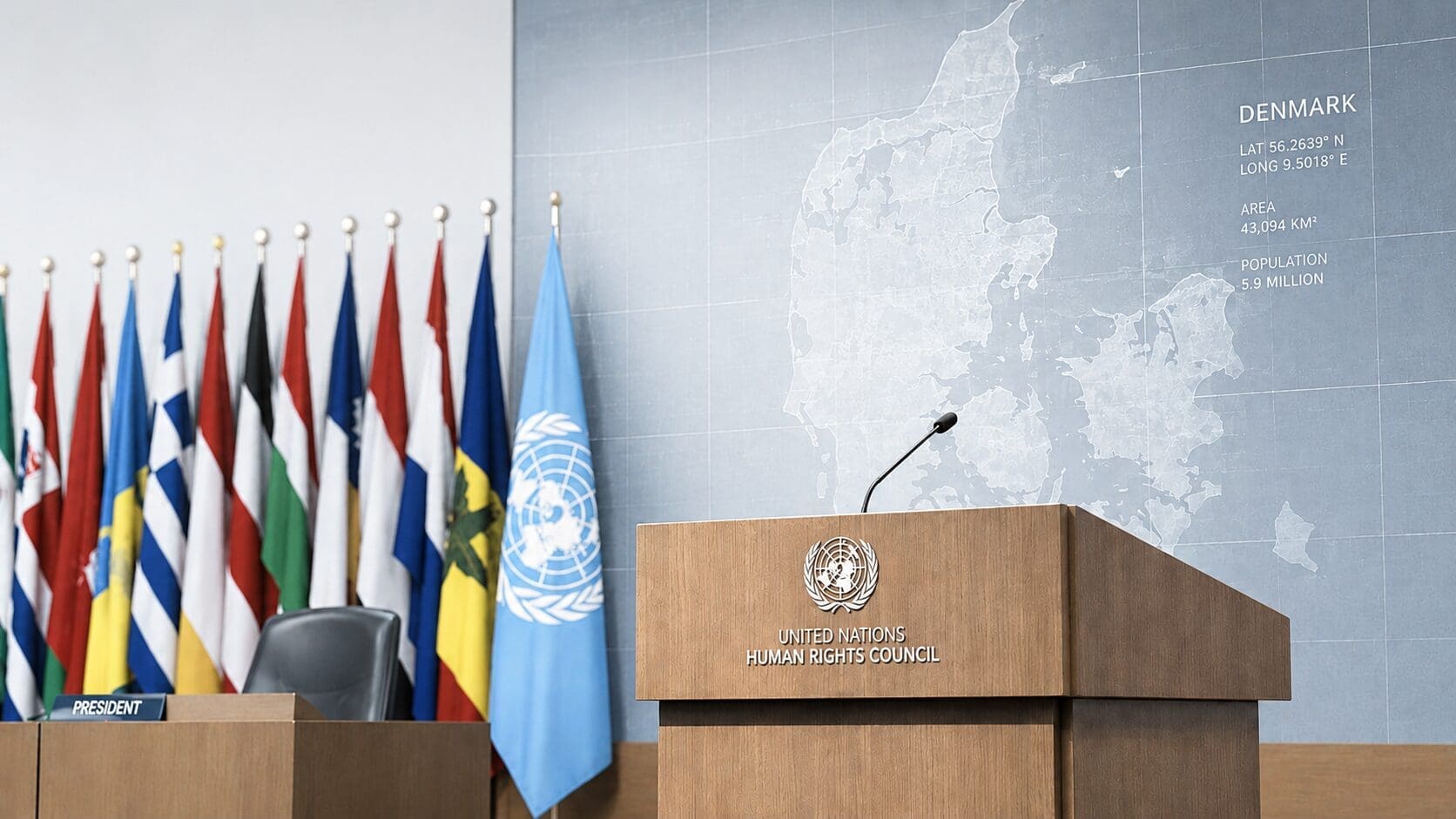
In February 2025, Denmark introduced its first National Action Plan Against Racism (NAPAR), acknowledging a long-standing issue identified by human rights monitors. However, six months later, during the 52nd session of the UN Universal Periodic Review (UPR) Working Group in Geneva, the adequacy of the plan was questioned. Forty-four of the eighty-seven participating states expressed concerns about racial discrimination, with some doubting whether Denmark’s approach met the challenge’s scope.

The UPR, held on 7 May 2026, is a UN peer-review mechanism for human rights conducted every four to five years. During Denmark’s fourth-cycle review, discussions ranged from praise to sharp criticism, with racism being the prominent theme. Questions focused on Denmark’s definition of racism, the communities protected by the plan, and safeguards against exclusionary structures.

Denmark’s record was mixed. The government ratified the International Convention for the Protection of All Persons from Enforced Disappearance, limited solitary confinement as a disciplinary measure, and adopted the anti-racism plan. Belgium praised these steps alongside the 2024 ratification of ILO Convention 190 and a new rape definition. Norway and Finland also noted relevant achievements.

Despite this, calls for further action were prominent. Belgium recommended effective hate crime investigations, improved data collection, and dialogues with affected communities. Western European states commended Danish institutions but demanded structural reforms.

The NAPAR’s scope and omissions became focal points. Critiques centered on the lack of focus on Muslims, the absence of hate-crime data, continued profiling, the “parallel society” housing framework, and a lack of monitoring mechanisms.

Denmark’s neighbors voiced notable interventions. France suggested revising ethnic-based legislative provisions, Luxembourg called for prohibitions on profiling and improved reporting mechanisms, and Ireland urged updating the national action plan and establishing an independent rapporteur for anti-trafficking.

Countries like Canada urged adherence to court rulings on housing frameworks and called for trauma-informed mental health services for Indigenous communities. Australia demanded the repeal of discriminatory social housing regulations and increased protections for gender-based violence survivors.

Germany raised concerns about migrant return centers and proposed reviewing housing minors’ necessity in such facilities. The Netherlands and New Zealand recommended guidelines for sex characteristics and the full application of international conventions. Finland addressed algorithmic discrimination against marginalized groups.

Western interventions treated the NAPAR as a starting point requiring further development and independent verification.

States outside the Western bloc echoed similar concerns. Malaysia recommended reviewing discriminatory policies, and Rwanda called for improved data systems on hate crimes. Qatar detailed recommendations for eliminating reporting barriers, and Tunisia demanded the plan cover all minorities and address anti-Islam discourse.

Turkey expressed sharper critiques, demanding a dedicated action plan against Islamophobia. Venezuela and China highlighted concerns with the “parallel society” act and colonialism impacts on Indigenous peoples. Bangladesh, Iran, and DPRK criticized “non-Western” classifications as discriminatory.

A common demand was for standardized, disaggregated data, pressed by Belgium, Qatar, Ireland, Malaysia, and others. The lack of such data hinders policy evaluation.

The definition of racism became a contested issue. Several states noted the NAPAR lacks a clear definition. CERD and ECRI have called for disaggregated data collection and addressing anti-Muslim discrimination.

Civil society submissions paralleled state recommendations. For example, a joint submission by CAP Liberté de Conscience, EMISCO, and Youth for Human Rights Denmark noted NAPAR’s gaps, such as the omission of Muslims as a target group.

The Danish Institute for Human Rights supported expanding the plan with specific, measurable goals and addressing discrimination against all minorities, lending institutional weight to the concerns raised.

Denmark now faces a range of recommendations on racial discrimination, gender-based violence, migrant rights, and more. For NAPAR, key demands include defining racial discrimination, expanding minority coverage, establishing hate-crime data systems, and reviewing the housing framework.

The implementation phase stretches over four-and-a-half years, with states reporting progress. The UPR serves as a sustained pressure mechanism, aiming to shift policies over time.

For NGOs, this period offers a strategic window to monitor Denmark’s acceptance of recommendations and leverage international consensus for policy change. The convergence of global states on specific reforms creates a broad coalition beyond geopolitical divides.

The UPR has placed structural racism on the international agenda for Denmark. However, the true test lies in Copenhagen, where the government must decide whether to expand NAPAR’s scope, revise definitions, and ensure independent scrutiny.

The states have spoken; Denmark must now choose its course of action.


Comments

6 responses to “International Scrutiny on Denmark’s Anti-Racism Plan: Insights from the UPR”

  1. Dr. Jam Man Avatar
    Dr. Jam Man

    Just what we need, another action plan to fix an issue that’s been around longer than my grandmother’s meatloaf recipe. 🇩🇰 Let’s hope it’s more than just a fancy brochure collecting dust on a shelf. 📄😏

  2. Sky Trinity Avatar
    Sky Trinity

    So, Denmark just rolled out its anti-racism plan like it’s the latest fashion trend, but with half the runway missing! 😂 Maybe they thought a sprinkle of good intentions was enough to cover the whole mess? 🤷‍♂️

  3. 57 Pixels Avatar
    57 Pixels

    Looks like Denmark’s NAPAR is a bit like a Danish pastry—looks good on the outside but leaves a lot to be desired on the inside. Maybe they should take a cue from the rest of Europe and stop icing over the real issues, eh? 😏

  4. innocent ghost Avatar
    innocent ghost

    Seems like Denmark’s anti-racism plan is about as effective as a chocolate teapot—everyone’s applauding the effort, but let’s be real, it’s just a fancy way to keep the status quo warm and cozy. 😏

  5. Popeye Wipeout Avatar
    Popeye Wipeout

    Seems like Denmark’s anti-racism plan is the latest IKEA assembly project—lots of parts, but good luck finding the instructions! 🇩🇰🛠️

  6. Steel Heart Avatar
    Steel Heart

    Well, it seems Denmark’s anti-racism plan is like a Danish pastry—looks good on the outside, but you bite in and realize there’s not much filling. 🍪 Keep the critiques coming, they might just need a bit more than a sprinkle of good intentions!

  7. slacker cat Avatar
    slacker cat

    Oh, look at Denmark flexing its muscles with a fancy Anti-Racism Plan, but it seems like they forgot to read the room when half the world’s watching. 🤷‍♂️ Maybe they should’ve just called it “Let’s Pretend We’re Doing Something” instead!

Leave a Reply

Your email address will not be published. Required fields are marked *

Last News

Detained Mayor Intensifies Effort for Release from "Pre-Trial Detention"

Detained Mayor Intensifies Effort for Release from "Pre-Trial Detention"

The Mayor of Tirana has warned he will take his case against his continued detention to the European Court of Human Rights.
Erion Veliaj has been held in what is termed “pre-trial detention” (PTD) since February 2025, pending an investigation by Albanian prosecutors.
His trial is yet to start and he robustly denies any wrongdoing but he continues to be held in a detention centre in Albania.
His l

Read More

International Scrutiny on Denmark’s Anti-Racism Plan: Insights from the UPR

International Scrutiny on Denmark’s Anti-Racism Plan: Insights from the UPR

In February 2025, Denmark introduced its first National Action Plan Against Racism (NAPAR), acknowledging a long-standing issue identified by human rights monitors. However, six months later, during the 52nd session of the UN Universal Periodic Review (UPR) Working Group in Geneva, the adequacy of the plan was questioned. Forty-four of the eighty-seven participating states expressed concerns abo

Read More

Labour Officials ‘Backing Away’ from Blocking Andy Burnham’s Return

Labour Officials ‘Backing Away’ from Blocking Andy Burnham’s Return

Billionaires Mikhail Fridman and former Russian Minister of Foreign Economic Relations Petr Aven are named as shareholders of a banking and financial services holding firm. Geoffrey Cox declared in the U.K. parliament’s Register of Members’ Financial Interests that he provided legal services to this firm.

Read More

Contempt Ruling Against Evo Morales Triggers Political Crisis in Bolivia 2026

Contempt Ruling Against Evo Morales Triggers Political Crisis in Bolivia 2026

LA PAZ, Bolivia – May 11, 2026 – Eurotoday Newspaper — Bolivia justice systems are facing renewed international scrutiny after former President Evo Morales failed to appear for a scheduled court hearing tied to an ongoing trafficking-related investigation.
Judicial authorities formally declared Morales in contempt following his absence, escalating political tensions across Bolivia and reigniting

Read More

Sudanese Victims Submit Sanctions Request to European Union’s High Representative

Sudanese Victims Submit Sanctions Request to European Union’s High Representative

On May 10, 2026, a formal request was submitted to the European Union’s High Representative for Foreign Affairs and Security Policy, Ms. Kaja Kallas, by DEMAIN law firm on behalf of Sudanese victims. They are urging for an investigation and the imposition of targeted sanctions under the EU Global Human Rights Sanctions Regime (CFSP Decision 2020/1999) against Emirati officials, Sudanese citizens,

Read More

Latvian Defense Minister Resigns Amid Leadership Changes on NATO’s Eastern Flank

Latvian Defense Minister Resigns Amid Leadership Changes on NATO’s Eastern Flank

Last Thursday, two stray Ukrainian drones crossed the Russian border and crashed in Latvia, with one exploding at an oil storage site in eastern Latvia. Ukraine’s Foreign Affairs Minister Andrii Sybiha stated that Russia’s electronic warfare redirected the drones. Latvia and Lithuania have appealed to NATO to enhance air defenses in their region following the event.
Andris Sprūds, an a

Read More

Ukraine’s Sense Bank scandal tests faith in wartime anti-corruption efforts

Ukraine’s Sense Bank scandal tests faith in wartime anti-corruption efforts

Ukraine’s anti-corruption drive has been rocked by allegations that a state-owned bank seized from sanctioned Russian owners was captured by a politically connected influence network tied to one of the country’s largest corruption investigations. The affair has also fuelled concerns that the bank could be used to launder money.
The claims centre on Sense Bank, formerly Alfa-Bank Ukraine, which w

Read More

Redesigning the Financial System for Growth

Redesigning the Financial System for Growth

An event by MFA.
One year after launching the Leeds Reforms and Financial Services Growth and Competitiveness Plan, the progress in transforming the UK’s financial system to spur growth is evaluated. Key figures from Westminster, financial regulators, and the financial services industry gather to discuss the Government’s financial services agenda and its impact on economic growth prospects.
Focus

Read More

US Trade Crisis Worsens: Container Imports Drop in 2026

US Trade Crisis Worsens: Container Imports Drop in 2026

WASHINGTON, United States  – May 8, 2026 – Eurotoday — US trade crisis concerns intensified after newly released shipping data showed that container imports into the United States declined by 5.5% during April 2026. Analysts say growing geopolitical instability, shifting tariff policies, and weakening business confidence are beginning to reshape global trade patterns and supply chain strategies.
T

Read More

URI Europe Regional Assembly, "Sacred Earth, Shared Humanity" and the Presentation of the PARTESS-COM Project

URI Europe Regional Assembly, "Sacred Earth, Shared Humanity" and the Presentation of the PARTESS-COM Project

By BRIDGES team
From April 29 to May 3, 2026, the URI Europe Regional Assembly, themed “Sacred Earth, Shared Humanity: URI Europe Responses to Violence and Harm,” took place at the Martí Codolar Centre in Barcelona. Cooperation Circles of the United Religions Initiative (URI) gathered to reconnect, share experiences, celebrate diversity, and develop joint actions for the future. The Assembly incl

Read More