


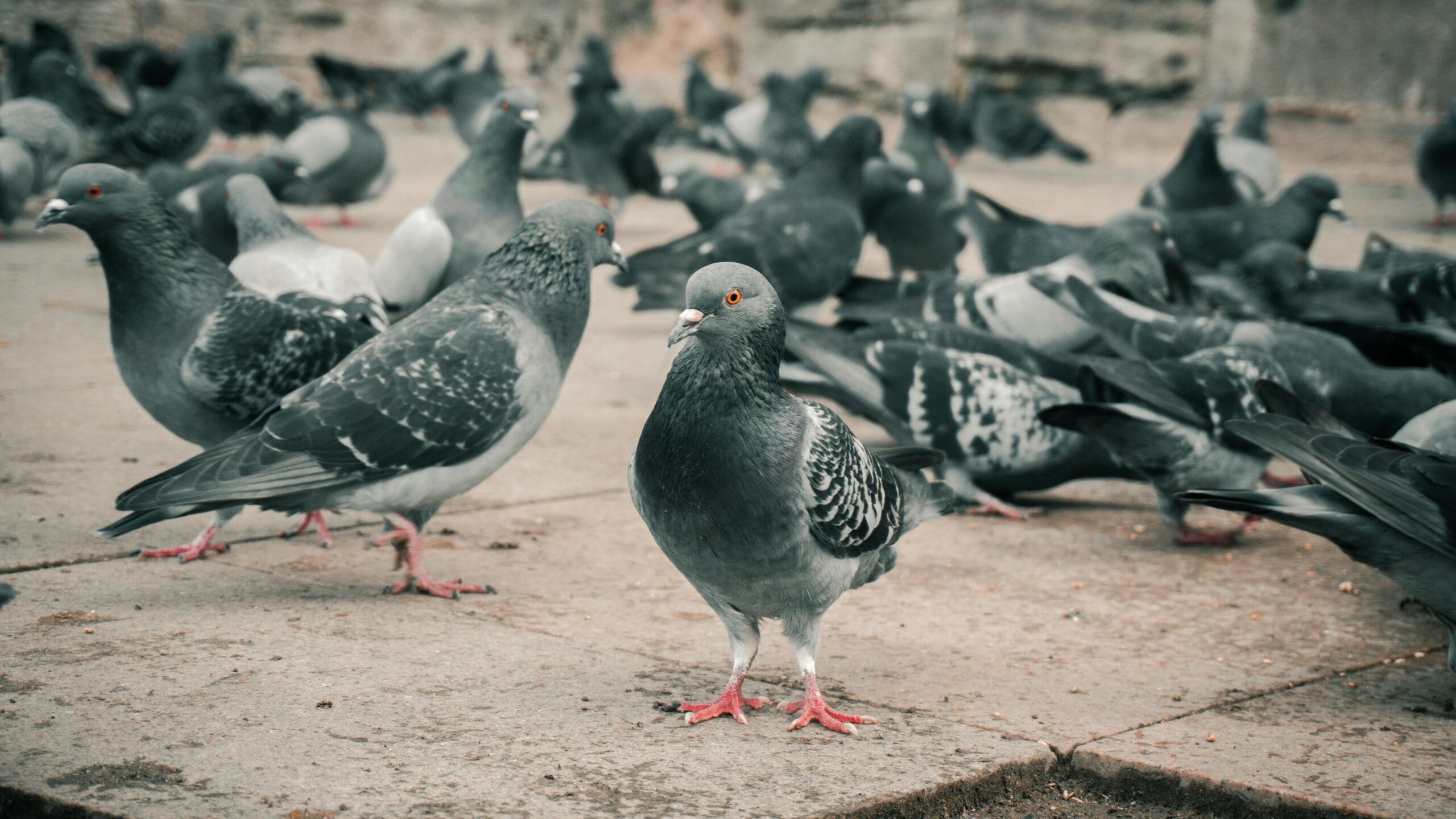
Pigeons’ Vision
While folklore often credits eagles and falcons with exceptional eyesight, ornithologists have discovered that pigeons have equally sharp vision. Moreover, pigeons can accurately distinguish colors at long distances. In Canada, coastal rescue services have capitalized on these abilities by training pigeons to recognize orange spots in water, such as life jackets and inflatable boats. Tests indicate that a well-trained pigeon identifies an orange spot in the sea three times more effectively than even the keenest, most experienced pilot.
Pigeon Flight
Initially, young pigeons fly awkwardly. This was once thought to be improved through practice. To test this, some pigeons were released to fly freely, while others were confined in narrow cages that restricted wing movement. Once the free pigeons learned to fly, the caged ones were freed, revealing they could fly just as well. This suggests that flight proficiency is less about training and more about the birds’ maturation.
Navigational Guidance
Previously, biologists assumed that experienced older birds, having made numerous migrations, guided the young. Indeed, migratory birds like wild geese, ducks, and cranes travel in mixed-age flocks, where the leadership of older birds is apparent. However, detailed studies using ringing methods have shown that many young finches migrate south earlier than adults.
Birds and Artificial Snakes
Today, various strategies are employed to deter birds from crops, like bird-shaped decoys signaling danger. Surprisingly, artificial snakes have proven to be a highly effective deterrent. Experiments showed significant success, with damage to green crops reducing by 17% compared to areas with other scarecrows. Without protection, the losses were 30%, but with artificial snakes, only 3%. The appearance of snakes scares birds and, unlike other decoys, birds do not habituate to them.
Illustrative photo: https://www.pexels.com/photo/close-up-shot-of-feral-pigeons-14720798/









Leave a Reply