


Another year, another EUDR delay. Such is the repeated failure of the European Union to get its anti-deforestation legislation off the ground that the question has to be asked: “Will it ever do so?’
It’s not just the inability to get the IT systems ready or the fact that supply chains for the key commodities are not ready for due diligence checks to demonstrate compliance. These are problems which can be ironed out with time.
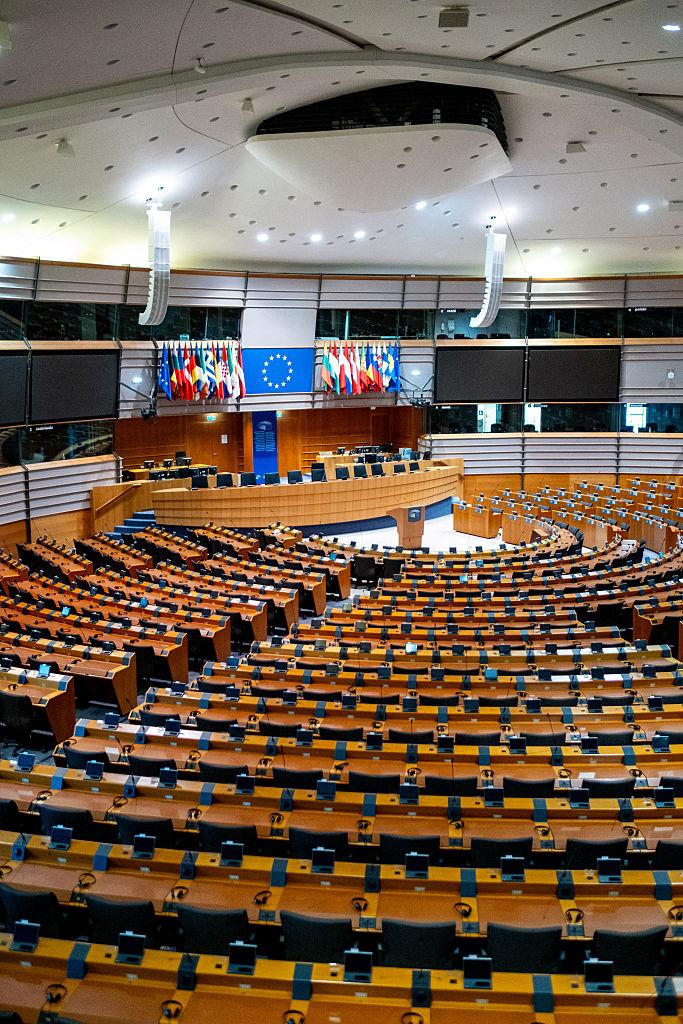
The real problem is the lack of political will in Brussels which has seen nearly 60% of MEPs vote for a postponement of legislation, mainly from the European People’s Party and far-right parties.
Not only do opponents want a delay, they are also calling for the EU Deforestation Regulation (EUDR) to be watered down to a point where it’s no longer acceptable to supporters.
The politicians and policymakers have failed, and it seems likely a key component of the EU Green Deal is not going to happen.
This is a huge blow for campaigners, and anyone who cares about our planet, because EUDR promised to cut global deforestation by 10%.
It would achieve this by forcing companies to show that supplies of key commodities like cattle, cocoa, coffee, palm oil, rubber, soy and wood into the EU were not linked to any forest loss since 2020.
Bear in mind that 86% of global deforestation between 2000 and 2020 can be attributed to crop and cattle production. The world lost around 100 million hectares, roughly the size of Egypt.
In 2022 alone, the Amazon saw record rates of tree degradation with two million hectares of forest cleared, much of it driven by meat production, both for livestock and to grow soybeans for animal feed.
So something had to be done. EUDR would not end deforestation but it would close off a lucrative market to producers who laid waste to much of what still covers 31% of the planet.
The price of EUDR failure can be seen in this month’s decision by soy traders to walk away from a voluntary agreement which has protected the Amazon since 2006.
The Amazon Soy Moratorium has saved millions of acres of tropical forest by getting traders only to purchase soybeans planted in land that had already been cultivated, not in deforested areas.
One study estimated that between 2006 and 2016 the moratorium prevented 9000 sq.kms of forest from being cut down.
But on January 1st a new law eliminating tax benefits for members of the moratorium came into effect in Mato Grosso, the Brazilian state that produces the most soybeans in the country.
It led to soy traders – including multinational firms like Cargill, Bunge and ADM – announcing plans to leave the moratorium in a move that will only put more of the Amazon at risk of deforestation.
But would they have done so if Brussels had implemented its deforestation legislation, closing off Europe to these post-moratorium soybean traders?
The move is of sufficient concern to leading supermarkets – Tesco, Aldi, Lidl, Sainsburys and Asda as well as Marks and Spencer – who have written to traders warning consumer confidence will be damaged if safeguards are not in place to ensure supplies not linked to deforestation.
Cocoa production, too, has been fuelling deforestation in new parts of Africa where decades of dependence on Ivory Coast, the world’s largest exporter of cacao beans, has weakened the soil and forced producers into neighbouring Liberia.
The European Union is the world’s largest importer of cocoa and EUDR could have played a part in introducing better practices among smallholders.
For the producers of coffee and palm oil, the larger companies, with sustainability programmes in place, are well prepared for EUDR.
However, around 70% of coffee is produced by smallholder farmers who would struggle to meet requirements on traceability. But with the average European spending €150 a year on coffee, there would be a clear incentive for the industry to demonstrate EUDR compliance.
Comments
20 responses to “Price of Failure of EU’s Deforestation Law Already Being Felt in Amazon”
-
Looks like the EU’s deforestation law is just another masterclass in procrastination, eh? 😂 Who needs forests when we can have endless meetings in Brussels? 🍷
-
Seems like the EU’s great deforestation crusade is more of a leisurely stroll through a park—delays and half-hearted efforts abound! 🍃 One might wonder if they’d rather sip a cappuccino than actually save the Amazon. ☕️🌳
-
Incredible how Brussels can take so long to sign off on a law that promises to save the Amazon but can whip out new regulations for parking meters faster than you can say “deforestation.” 🙄 Maybe if they threw in some more paperwork, we’d finally see some action!
-
Just what we needed, another masterclass in bureaucratic foot-dragging from Brussels. It’s almost as if they think “deforestation” is just a trendy new café concept rather than a disaster in the making. 🍃😏
-
Just brilliant, innit? The EU can’t seem to get its act together on deforestation while the Amazon’s getting turned into a butcher’s yard. Guess we’ll just keep sipping our overpriced lattes, oblivious to the chop-chop going on in the rainforest! 😂🌳
-
You know, it’s almost charming how the EU keeps pushing back the Deforestation Law like it’s a bad date—everyone knows it’s a mess, but nobody wants to call it out! 😂 Meanwhile, the Amazon’s just sitting there, waiting for someone to take responsibility—what a romantic tragedy, eh?
-
Looks like the EU’s Deforestation Law is about as effective as a chocolate teapot—great in theory but utterly useless in practice. 🍫🫖 Cheers to more red tape while the Amazon gets reduced to a shopping list!
-
Can’t wait for the EU to finally get its act together on deforestation laws—maybe by the time pigs fly, or should I say, by the time the Amazon runs out of trees? 🍃💸
-
Brilliant! Who knew that delaying a simple anti-deforestation law could actually lead to more trees being chopped down? 🍃 At this rate, we’ll need a new EU regulation just to make sure we still have forests left to save! 😂
-
Funny how the EU’s big green dreams seem to vanish faster than my taxi fare after a long night out in Brussels. 😂 Maybe if they spent less time arguing about who gets the last croissant, they could actually save a few trees instead! 🍃
-
Seems like the EU’s Deforestation Law is like a classic Eurotrip: lots of plans, but no one knows if we’ll even make it to the destination. 🤷♂️ Maybe next year, or the year after that… or just never? 🌍💔
-
Funny how the EU can rally together to delay a law faster than you can say “deforestation,” yet they still can’t figure out how to keep their forests intact. 🤷♂️ At this rate, we might have to start calling it the ‘EU Deforestation Regulation’ just to keep things honest! 🪵💔
-
Seems like the EU’s Deforestation Law is as effective as a chocolate teapot, eh? 🍫🫖 While they’re busy delaying, the Amazon’s practically hosting a clearance sale!
-
Seems like the EU’s great deforestation plan is just another bureaucratic fairy tale—perfect for bedtime stories, but not for saving the Amazon. 🌍✌️ Keep up the good work, Brussels; at this rate, we might just run out of trees before we run out of excuses! 😂
-
Just what we needed, another classic EU delay – it’s like waiting for a bus only to realize it’s stuck in traffic forever! 🚍💨 Deforestation? More like defor-what? At this rate, we’ll be sending postcards from the Amazon asking if anyone’s noticed the trees are gone! 🌳✌️
-
You know, it’s truly impressive how the EU manages to turn a simple law into an Olympic event of delays and missed opportunities. At this rate, the only thing getting greener is the envy of those who actually care about the forest! 🌳🙄
-
Looks like the EU’s deforestation law is about as effective as a chocolate teapot. 🍫🫖 While they twiddle their thumbs in Brussels, the Amazon’s getting a haircut—just not the stylish kind.
-
Looks like the EU’s Deforestation Law is like a classic case of “let’s promise big, but deliver nada”—just what we need, more paperwork while the Amazon gets a haircut! 😏🌳
-
Absolutely smashing job, Brussels! Who needs forests when we can have endless delays and bureaucratic foot-dragging? 🍃🙄
-
Just brilliant, isn’t it? The EU’s Deforestation Law is like a bad comedy show—everyone’s waiting for the punchline while the forests keep disappearing faster than a pint on a Friday night! 🍻

Last News

French Police Prevented from Raiding Macron’s Palace to Investigate Panthéon Contracts
Investigators were probing allegations of favoritism, corruption, influence peddling, and conf
April 14, 1912 – Sinking of the Titanic

Security Update: Ukraine unter Druck – mit Vassili Golod

Denmark’s Anti-Racism Action Plan Falls Short Due to Islamophobia Exclusion
On the surface, this seems like a milestone, and in part, it is. However,
UK Approves Purchase of the Telegraph by POLITICO Owner Axel Springer
In a statement to parliament, Nandy mentioned she doesn’t intend to interfere with the merger between Axel Springer, POLITICO’s owner, and the Telegraph, ba
The Bureaucracy of Memory: France’s Abstention and the Burden of History
France, de

Is Starmer Guilty of ‘Corrosive Complacency’ on Defence?

Wie Deutschland sich von US-Tech lösen will – mit Karsten Wildberger

Steps to Take If You Lose Your Passport in Europe
Reaching for your passport — only to find it missing — can quickly turn a trip into a stressful ordeal. Whether it slipped out of your bag, was stolen, or left behind, losing a passport abroad presents challenges.
Fortunately, Europe offers clear procedures to help recover, remain legally compliant, and return home safely. Acting swiftly and following the proper steps can make a significant diff

Kallas Condemns International Law Breakdown in Middle East and Ukraine: Worst Since WWII
Kallas also criticized a shift toward “coercive power politics,” cautioning against a world shaped by competing spheres of influence.
“We are hearing a lot about m
Leave a Reply