



Greece (Brussels Morning) What once appeared to be an unbreakable partnership now shows clear signs of strain. The alliance between Saudi Arabia and the United Arab Emirates, forged at the outset of the Yemen war, has been tested by diverging strategic priorities, particularly over the role of Yemeni separatist forces.
While Riyadh has doubled down on its support for Yemen’s internationally recognized government, Abu Dhabi has stepped back from its earlier backing of southern autonomy movements, exposing fractures that had long been obscured by the shared objective of confronting the Houthis.
The shift raises broader questions about the Emirates’ reliability as a long-term partner and the extent to which states or political actors can depend on its commitments. By contrast, Saudi Arabia is increasingly positioning itself as the region’s dominant power, leveraging political, economic and diplomatic pressure to shape outcomes in its favor.
Central to this strategy is the pursuit of influence over another critical theater, where control of key maritime chokepoints, alongside leverage in Somalia and potentially Somaliland, would allow Riyadh to project power over vital shipping lanes and exert a decisive influence on regional stability.
The rift between Saudi Arabia and the United Arab Emirates over Yemen did not emerge overnight but crystallized around a concrete rupture that laid bare their diverging ambitions.
Tensions came into the open when Saudi forces struck a shipment at a key Yemeni port that Riyadh believed was intended for UAE-aligned southern factions, a move Saudi officials framed as an unacceptable breach of coalition discipline.
The episode underscored how the two partners, once bound by a shared campaign against the Houthis, had come to support rival political endgames inside Yemen.
For Abu Dhabi, backing southern power brokers offered a means of securing long-term influence over ports and maritime routes; for Riyadh, such moves threatened the authority of Yemen’s internationally recognized government and Saudi Arabia’s own primacy in shaping the country’s future. The fallout from that incident marked a turning point, transforming a quiet divergence into a strategic estrangement that continues to reshape Gulf power dynamics.
Two decades of regional (in)stability
The war in Yemen, now in its second decade, began as an internal rupture of fragile state authority that swiftly drew in regional heavyweights and turned a struggling Arab republic into a geopolitical battleground.
Rooted in long-standing political grievances and power struggles, the conflict sharpened in 2014 when the Iran-aligned Houthi movement seized the capital, Sanaa, forcing Yemen’s internationally recognized government into exile and prompting a Saudi-led coalition to intervene in 2015 in an effort to restore its authority and contain perceived Iranian influence on the Arabian Peninsula.
Over the years, the struggle widened beyond a simple north–south divide, devolving into a multi-layered civil war in which the Houthis entrenched control over much of northern Yemen while a loose alliance of pro-government forces, bolstered by Saudi and Emirati backing, fought to dislodge them.
More recently, the war’s dynamics have fractured further as the United Arab Emirates-supported Southern Transitional Council, a separatist force now holding significant territory in the south, has broken ranks with Riyadh’s preferred government, exposing deep fissures within the anti-Houthi camp and underscoring how Yemen’s conflict has become both a proxy for broader Saudi-Iran rivalry and a crucible of competing Gulf interests.
The toll has been catastrophic: one of the
Seems like the Saudi-Emirati bromance is hitting the rocks faster than a cheap ouzo on a Friday night! 🍸 Who knew a little sand between the toes could cause such a fuss? 😂 Seems like the Saudi-Emirati bromance just hit a rough patch, eh?🤷♂️ Who knew supporting a civil war could lead to such awkward dinner conversations? 🍷 Looks like the Saudi-Emirati bromance hit a snag, eh? Who knew a little old civil war could turn best mates into rival power players? 😂 Blimey, who knew that “unbreakable partnerships” could crack faster than a cheap wine bottle at a dodgy tavern? Cheers to the Saudis and Emiratis for turning a civil war into a Eurotrip-level family squabble! 🍷😏 No need for a soap opera when you’ve got Saudi and Emirati drama in Yemen—who knew geopolitics could be so entertaining? 😂 Just grab your popcorn and watch the ‘best friends’ turn into frenemies! 🍿 Just what we needed, another example of two wealthy cousins arguing over who gets to control the family business—except this time, it’s a war zone instead of a fancy restaurant. 🍽️ Who knew geopolitics could be so… entertaining? 😂 Looks like the Saudi-Emirati bromance has hit a rough patch—who knew a little thing like a civil war could ruin a perfectly good alliance? 😏 Just when you think they’re all on the same page, boom! It’s like watching two blokes in a pub arguing over who gets the last pint—classic! 🍻 Funny how two best mates can turn into rivals faster than a taxi in Rome when the meter’s running. One minute you’re sharing falafel, the next you’re throwing punches over who gets the last bite of the kebab. 🍽️💥 Seems like the Saudis and Emiratis are having a bit of a lover’s quarrel—who knew a civil war could turn into such a messy divorce? 🤷♂️💔 Must be a real hoot trying to keep up with their shifting alliances while everyone’s just trying to survive the chaos! Looks like the Saudis and Emiratis have gone from best mates to awkward brunch companions in record time. Who knew a little civil war could turn a solid alliance into a game of “who’s got the bigger ego”? 😂🥂 Seems like the Saudi-Emirati partnership is about as solid as a Greek olive oil bottle left out in the sun. Who knew Yemen could turn into a reality show of “who’s the bigger boss”? 🍿😏 Seems like the Saudi-Emirati bromance hit a bump—who knew a little Yemen could stir up such drama? 🤷♂️ Just when you think they’re all about coalition goals, turns out they’re just playing a game of “who’s got the bigger port”? 😂 Seems like the Saudi-Emirati buddy cop duo is finally showing their true colors—who knew a two-decade-long conflict could lead to such a *shocking* twist? 😂 I suppose not all partnerships can handle a little “friendly” fire! So, the Saudi-Emirati bromance is on the rocks, eh? Just when you thought geopolitics was all about handshakes and smiles, turns out it’s more like a soap opera – who knew Yemen would be the drama queen? 😂 Looks like the Saudi-Emirati buddy cop film has turned into a soap opera! Who knew that shared interests in Yemen could lead to such an entertaining feud? 😂 So, looks like the Saudis and Emiratis have decided to play a game of geopolitical musical chairs—too bad the music’s stopped and half the players are still standing! 🎶💼 Who knew that a rift over Yemen would turn the ‘best buds’ into ‘frenemies’? 🤷♂️ I mean, it’s not like they signed a pact or anything, right? 😂 Looks like the Saudis and Emiratis are having a bit of a family squabble over Yemen—who knew they weren’t the perfect couple? 🤷♂️ Just goes to show, even the best-laid plans can go pear-shaped when you can’t agree on who gets the last baklava at the table! 🍰 Seems like the Saudi-Emirati bromance is hitting a rough patch—who knew Yemen could be such a relationship counselor? 😂 Let’s hope their next group therapy session is more productive than their last few military adventures! Seems like the Saudis and Emiratis can’t quite decide if they’re in a bromance or a bitter breakup. One moment they’re best mates against the Houthis, and the next, it’s “not my problem, mate!” 🤷♂️ ZUG, Switzerland, May 29, 2026 (GLOBE NEWSWIRE) — The primary endpoint of mean change in best corrected visual acuity (BCVA) from baseline to week 52 in both Phase 3 trials was not met The secondary endpoint of retinal thickness showed a substantial and persistent reduction with OCS-01 vs vehicle in both trials Oculis will focus its developmental efforts and financial resources on the
Comments
20 responses to “How Yemen Exposed the Saudi-Emirati Fault Line”
Last News
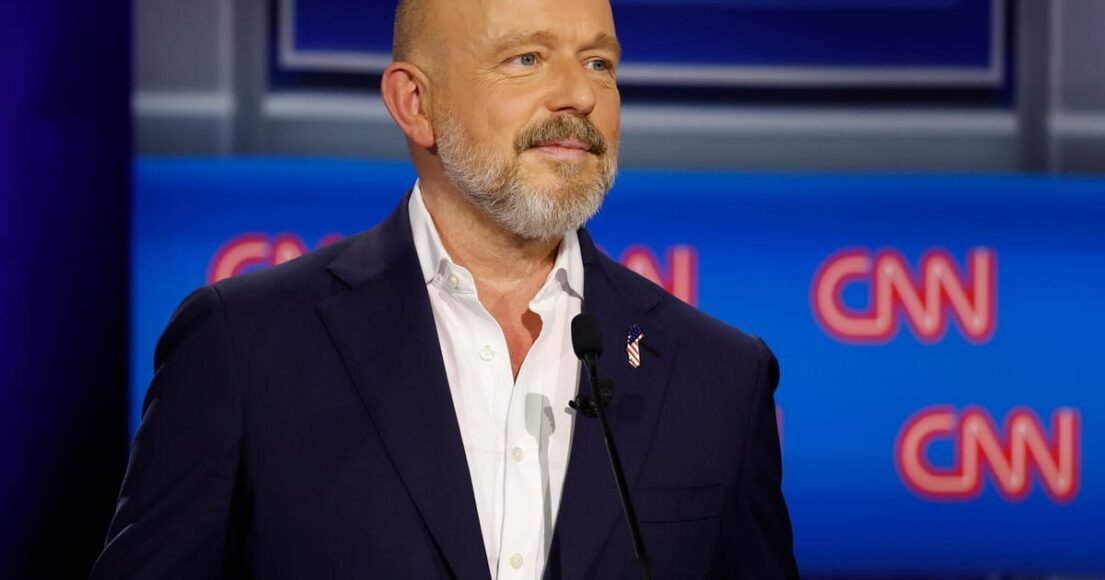
Steve Hilton shattered UK politics — now he wants to upend California’s
His chances of winning in November are slim, given California’s Democratic leanings and its strong opposition to Donald Trump — who has endorsed him. 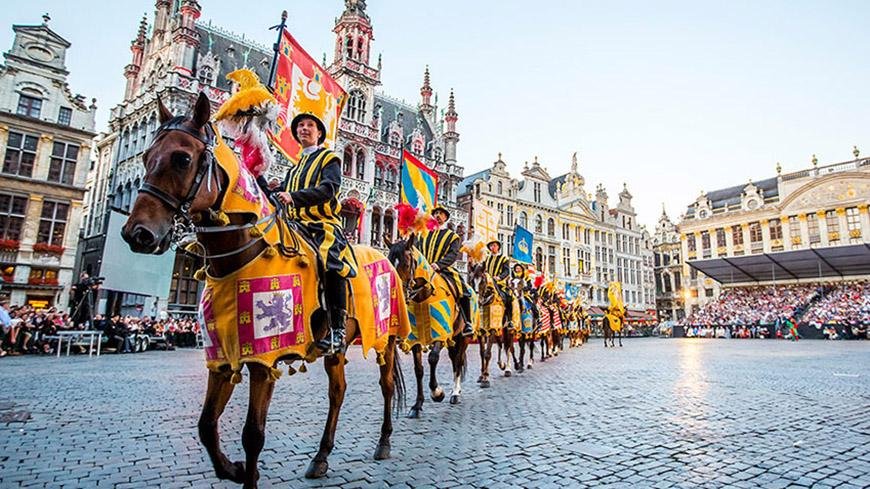
Horses Bolt in Rome After Fireworks Scare During 2026 Parade Rehearsal

Oculis Reveals Topline Results from DIAMOND Phase 3
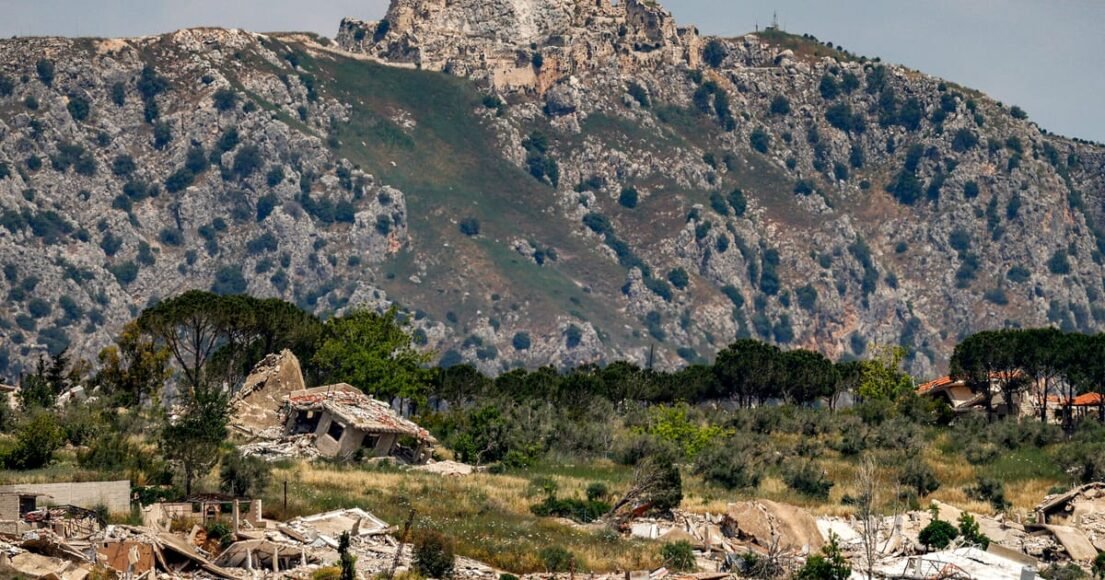
Israel Seizes Crusader Castle Amid Escalating War in Southern Lebanon
On Sunday, Israel announced that its forces, including a significant number of IDF ground soldiers, would continue advancing into southern Lebanon to confront Hezbollah.
Despite a truce agreed upon in April to cease hostilities in Lebanon, it has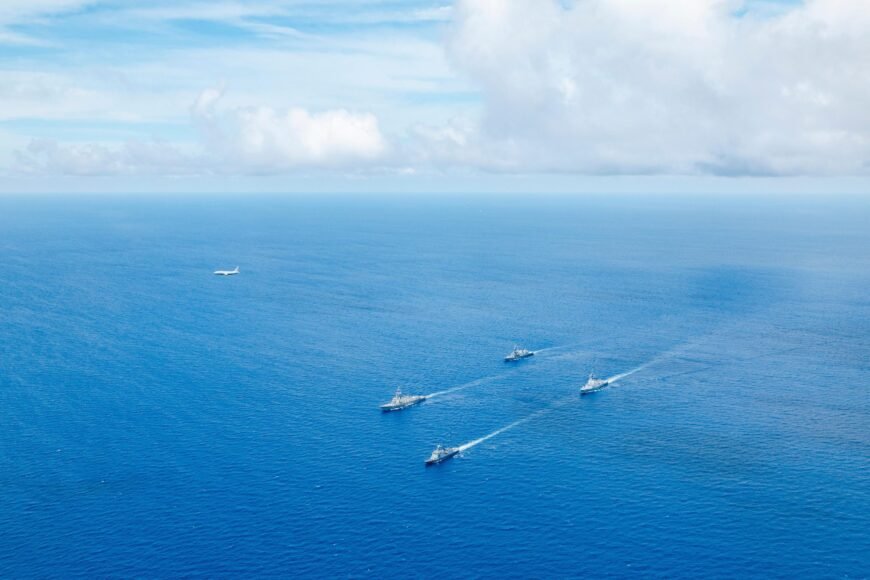
China’s Military Expansion Fuels Enhanced Indo-Pacific Defense Cooperation Amid Shifting Regional Security Dynamics for 2026

Bosuns and Able Seamen Strike

Hundreds Detained in Paris After Football Celebrations Turn Violent
Far-right leader Marine Le Pen stated on X: “Only in France does a football club’s victory ignite riots. Only in France do people feel compelled to barricade themselves in their homes on a victory night to avoid violence.”
Valérie Pécresse, head of the Île-de-France region including Paris, urged for sanctions against the violent in
Reports Emerge of Russia Drone Attacks Across Multiple Regions as Air Defenses Respond, Russia 2026
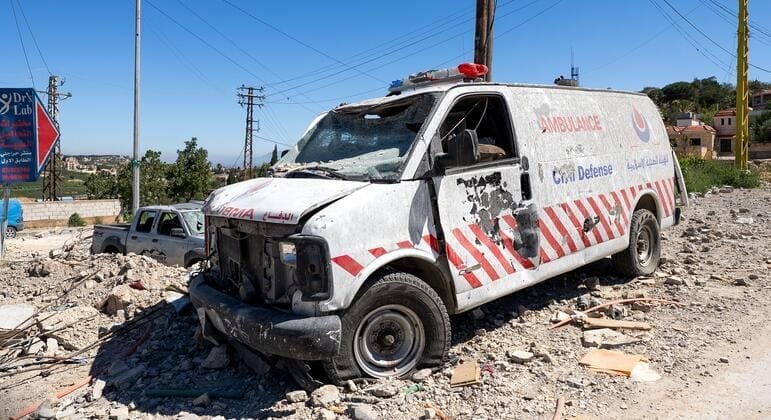
Flak Jackets and Final Goodbyes: Lebanon’s First Responders Under Fire
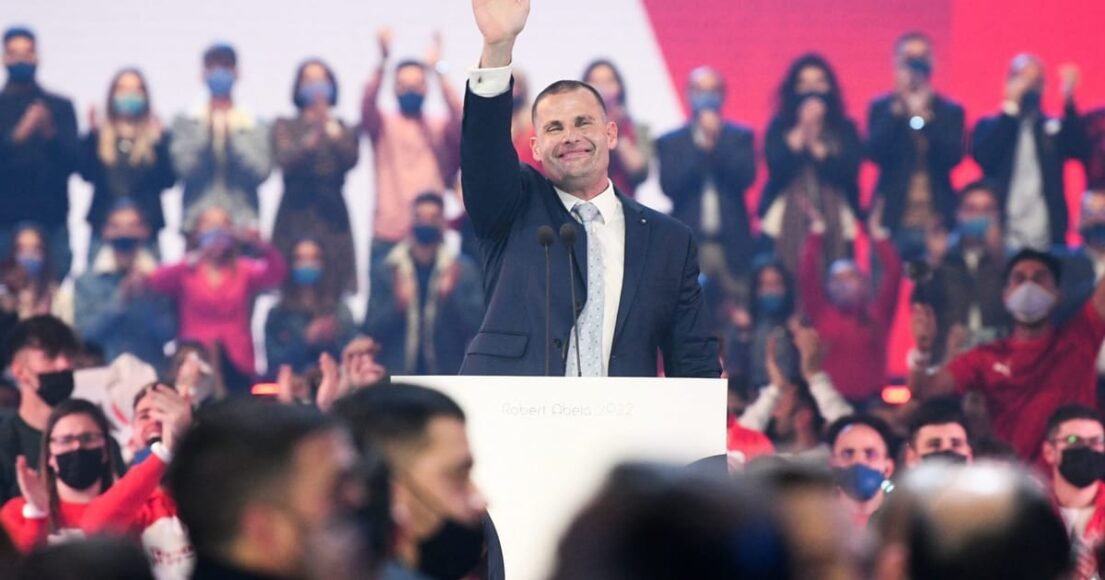
Malta’s Prime Minister Announces Historic Win in Snap Election
Alex Borg, head of the opposition Nationalists Party, seemed to acknowledge defeat on Sunday, stating the outcome was “not the result we wanted, but it’s a very clear message.”
Abela’s victory was highly antici

Leave a Reply