The Gentiles Proclaim the Apostles as Gods

The Apostles Paul and Barnabas: Preaching, Miracles, and Perseverance

By Professor A.P. Lopukhin

The events in Acts of the Apostles, Chapter 14, narrate the travels and ministry of Paul and Barnabas in Iconium, Lystra, and Derbe. This passage chronicles their compelling preaching, a miraculous healing, the misguided worship offered to them by the Gentiles, and the resistance and trials they faced as they established Christian communities.

Preaching in Iconium (Acts 14:1–7)

Paul and Barnabas began their mission in Iconium, entering a Jewish synagogue where their words converted a significant number of Jews and Gentile proselytes. However, opposition arose from the unbelieving Jews, who incited the Gentiles against the apostles by spreading slander. Despite the hostility, Paul and Barnabas remained steadfast, boldly preaching with the Lord’s support. Miracles and signs accompanied their ministry, affirming the truth of their message. Their work, however, divided the city—some sided with the apostles, while others aligned with their detractors. Eventually, threats of violence forced them to flee to the Lycaonian cities of Lystra and Derbe.

Healing a Lame Man in Lystra and Misplaced Worship (Acts 14:8–18)

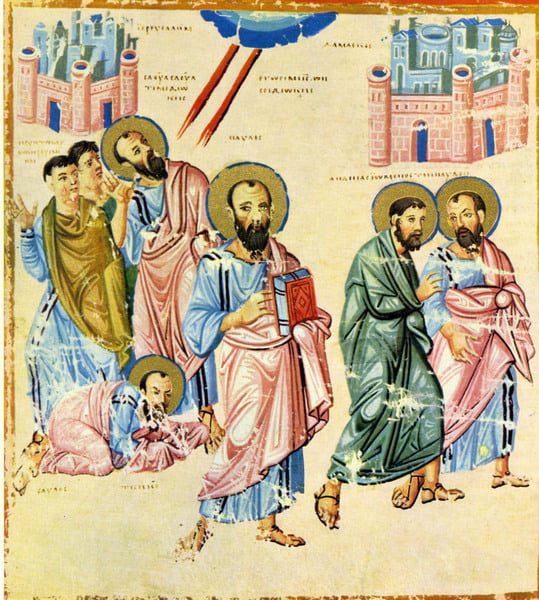
In Lystra, Paul encountered a man disabled from birth who had never walked. Observing the man’s faith, Paul commanded him in the name of Jesus Christ to stand up, and the man miraculously leaped to his feet. Witnessing this, the crowd proclaimed, in their Lycaonian dialect, that the gods had descended in human form. They identified Barnabas as Zeus, likely due to his dignified presence, and Paul as Hermes, given his eloquence and dominant role in speaking.

The priest of Zeus brought bulls and garlands to make sacrifices to the apostles, which Paul and Barnabas vehemently opposed. Tearing their garments—a Jewish expression of deep grief—they rushed into the crowd to protest. Declaring themselves mere humans, they pointed to the living God as the Creator of all things and denounced the worship of pagan gods. They reminded the people that, though God had allowed nations to follow their own paths in the past, His works—like the provision of rain and fruitful seasons—testified to His existence and goodness. Despite their passionate appeal, they struggled to dissuade the crowd from offering sacrifices.

Persecution and Stoning in Lystra (Acts 14:19–20)

The situation in Lystra took a dramatic turn when Jews from Antioch and Iconium arrived, inciting the crowd against the apostles. Though the people had revered Paul and Barnabas as gods moments earlier, their attitudes shifted, and they stoned Paul, dragging him out of the city and leaving him for dead. However, Paul rose up with miraculous strength as the disciples gathered around him. Undeterred, he returned boldly to the city before departing with Barnabas to Derbe the following day.

Return Journey and Strengthening Communities (Acts 14:21–28)

After successfully preaching in Derbe and gaining numerous disciples, Paul and Barnabas retraced their steps through Lystra, Iconium, and Antioch. They encouraged the fledgling Christian communities to remain steadfast in their faith despite persecution. Emphasizing that tribulations are a necessary path to entering the Kingdom of God, they sought to fortify the believers’ spiritual resolve.

During this return journey, the apostles ordained elders in each church to provide leadership and stability, consecrating them through prayer and fasting. Committing these communities to God’s care, they continued their travels, passing through Pisidia to Pamphylia, where they preached in Perga. From there, they traveled to the port city of Attalia, eventually sailing back to Syrian Antioch, the starting point of their missionary journey.

Upon their return, Paul and Barnabas gathered the Christian community in Antioch and shared their experiences. They testified to God’s power at work in their ministry, emphasizing how He had opened the door of faith to the Gentiles. They remained in Antioch for an extended period, strengthening the local disciples.

Reflections on the Apostolic Mission

This chapter highlights the unwavering dedication of Paul and Barnabas, who, despite hostility and even physical assault, continued to spread the Gospel. Their experiences reflect the profound challenges and grace-filled victories inherent in missionary work.

The miraculous healing of the lame man and the subsequent worship by the Gentiles underscore both the transformative power of God and the misunderstandings that can arise in the cultural context of paganism. Similarly, the apostles’ return to the very cities where they faced persecution exemplifies their remarkable courage and commitment to nurturing the faith of new believers.

###


Comments

One response to “The Gentiles Proclaim the Apostles as Gods”

  1. Talk about a divine case of mistaken identity! I’d say if Paul and Barnabas had a euro for every time someone confused them for gods, they could’ve opened a nice little café in Lystra instead of dodging stones. 😂🍵

Leave a Reply

Your email address will not be published. Required fields are marked *

Last News

Understanding the Importance of a Registered Office Address for Every UK Company

Understanding the Importance of a Registered Office Address for Every UK Company

London, June 26 – Eurotoday Newspaper — Virtual registered office services are seeing increased demand as more entrepreneurs register companies online and seek flexible ways to meet UK legal requirements. Company formation specialists say the trend reflects the continued growth of remote businesses and digital startups across the country.
More New Companies Choose Professional Registered Office

Read More

Why Europe’s Heat Waves Are Still So Deadly

Why Europe’s Heat Waves Are Still So Deadly

“We designed our cities based on past climate conditions,” remarked Jeroen Kluck, a professor at the Amsterdam University of Applied Sciences who studies climate resilience in urban areas.
“Our simulations indicate that more homes will become too hot, even with sun screening and ventilation,” he noted. “In the future, active cooling systems might be necessary for thes

Read More

EU Deploys Rescue Teams to Venezuela

EU Deploys Rescue Teams to Venezuela

Eight member states have mobilized emergency assistance for Venezuela following the 24 June earthquakes, with UN teams coordinating search-and-rescue efforts.
The European Union has dispatched rescue teams, medical personnel, and emergency equipment to Venezuela after two significant earthquakes on 24 June, resulting in numerous casualties. Over 520 responders have been mobilized through the EU C

Read More

How Executive Thought Leadership Drives Brand Trust in 2026

How Executive Thought Leadership Drives Brand Trust in 2026

London, June 26 – Eurotoday Newspaper — Brand trust building is emerging as a leading business strategy as more executives take public roles to strengthen their companies’ reputations. Corporate leaders are increasingly sharing expert insights through interviews, articles, conferences, and social platforms to improve transparency and establish credibility with customers, investors, and stakehold

Read More

Britain’s next leader must decide on North Sea drilling as Donald Trump watches.

Britain’s next leader must decide on North Sea drilling as Donald Trump watches.

The final legal decision on two advanced projects, potentially starting production this year, rests with U.K. Energy Secretary Ed Miliband. Miliband’s Department for Energy Security and Net Zero has been contacted for a statement; Burnham’s team hasn’t responded to inquiries. Miliband, Labour’s leading climate advocate, previously criticized the Rosebank project as “climate vanda

Read More

Council of Europe Commissioner Urges Ongoing Solidarity and Human Rights Protection for Displaced Ukrainians in Europe

Council of Europe Commissioner Urges Ongoing Solidarity and Human Rights Protection for Displaced Ukrainians in Europe

Gdansk, 26 June 2026 – Today, Michael O’Flaherty, the Council of Europe Commissioner for Human Rights, released Observations warning against prematurely ending protection and assistance for Ukrainians displaced across Europe by Russia’s ongoing war.
These Observations build on the Commissioner’s earlier statement and highlight the diminishing support for displaced Ukrainians. This includes potent

Read More

Russian-Appointed Authorities Declare Emergency in Crimea Following Infrastructure Disruptions

Russian-Appointed Authorities Declare Emergency in Crimea Following Infrastructure Disruptions

Crimea, June 26 – Eurotoday Newspaper — Crimea situation today remains a major focus after Russian-installed authorities declared an emergency following reported infrastructure disruptions across parts of the peninsula. Crimea, 2026 — Emergency response teams were deployed to assess affected areas, restore essential services, and coordinate repairs while officials continued evaluating the exten

Read More

Ukraine Protection Plan Transitions Beyond Emergency Mode

Ukraine Protection Plan Transitions Beyond Emergency Mode

The European Commission is planning to extend temporary protection for Ukrainians fleeing the conflict until March 4, 2028, granting them continued residence, work, and welfare rights in the EU. This extension aims to provide stability for families already settled across Europe, while addressing challenges shaped by Ukraine’s ongoing war, labor demands, and military obligations. Announced i

Read More

EU Commission HQ closes air-conditioning due to heatwave

EU Commission HQ closes air-conditioning due to heatwave

Belgium and much of Europe have been enduring extreme heat, with record high temperatures over the past week.
The European Commission advised its staff earlier this week to avoid going outside during peak heat, stay hydrated, and start work earlier.
This advice upset some Commission staff, especially those in buildings without air-conditioning, like DG AGRI, as per internal communications viewed b

Read More

European Heatwave: Paris Police May Ban Pride March

European Heatwave: Paris Police May Ban Pride March

Sarhan Basem is Eurotoday’s Senior Correspondent to the European Parliament. With a Bachelor’s degree in English Literature, Sarhan brings a unique blend of linguistic finesse and analytical prowess to his reporting. Specializing in foreign affairs, human rights, civil liberties, and security issues, he delves deep into the intricacies of global politics to provide insightful comment

Read More