


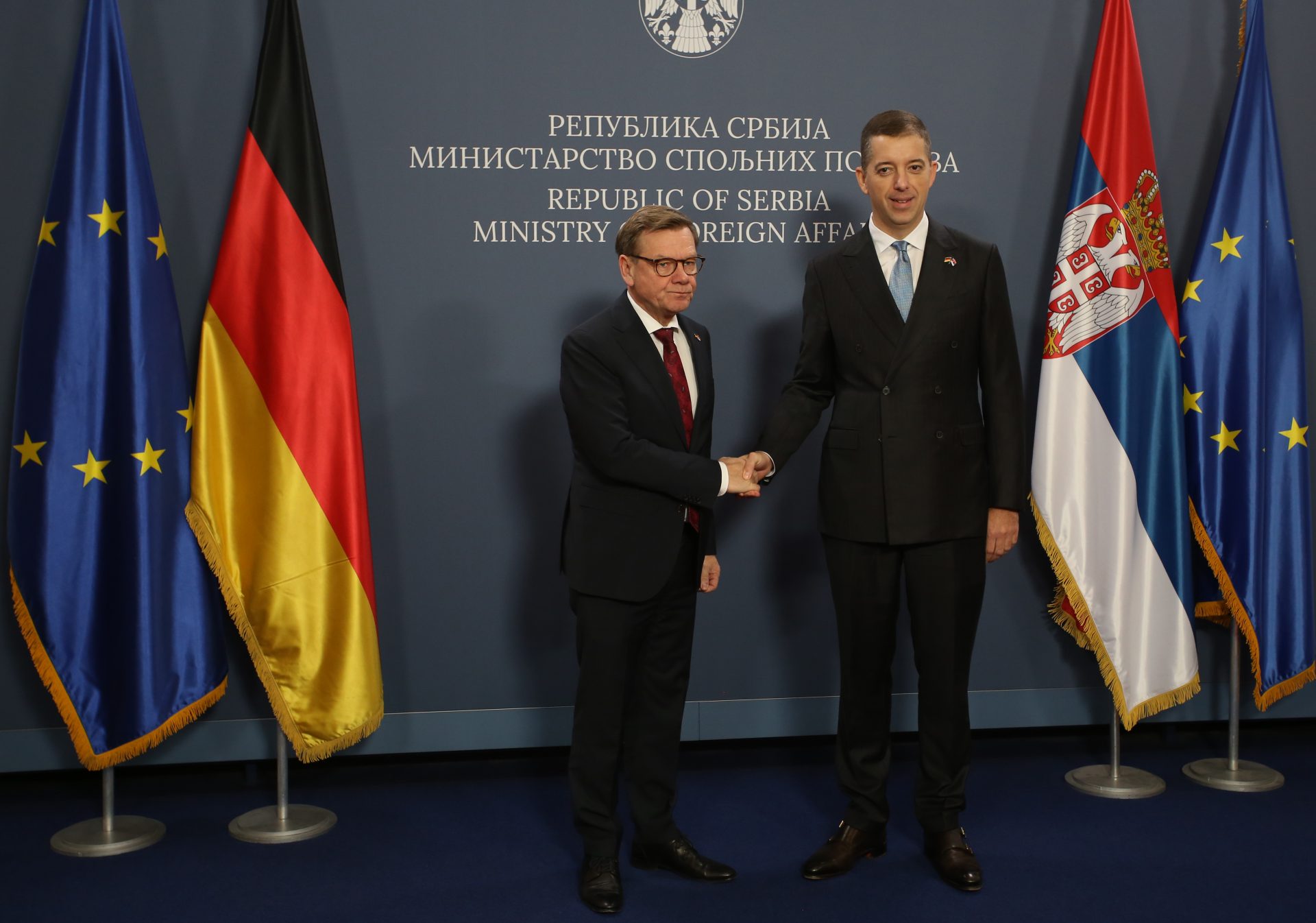
BEOGRAD – German Foreign Minister Johan Vadeful stated today following his meeting with Serbian Foreign Minister Marko Đurić that Belgrade and Berlin share strong ties and that Serbia belongs to the European family.
”Germany and Serbia have maintained a close relationship for many years, both economically and through various personal connections. Numerous German businesses operate successfully in Serbia, making Germany its most significant trading partner. A considerable number of individuals of Serbian descent have made their homes in Germany. These relationships are of immense value. Serbia is part of our European family and deserves the chance to join the EU community of values,” Vadeful remarked.
Vadeful expressed gratitude for the warm welcome and assessed their discussions as interesting and constructive. He highlighted the existing connections between Serbia and EU member states and expressed a desire to strengthen these ties further. “Germany will remain a close partner in this endeavor,” said Vadeful. He noted that the promise made by the EU to the Western Balkan countries in Thessaloniki in 2002 remains valid, and they talked about collaboratively advocating for increased cooperation and upholding European values, freedom, democracy, and the rule of law in a spirit of mutual trust.
“I conveyed that Serbia, being the largest economy and most populous nation in the Western Balkans, holds special importance. While we may not see eye to eye on every issue, we acknowledge the potential for closer cooperation in various areas, particularly in energy supply and the enhancement of renewable energy usage. Our objectives include reducing dependence on Russia. We also addressed European security,” stated Vadeful.
He mentioned that the United Nations Security Council in New York had passed a resolution facilitating a 20-point plan for peacekeeping operations and humanitarian aid in Gaza.
”The Federal Government wholeheartedly welcomes this development. It is encouraging news and demonstrates that the United Nations system is operational,” Vadeful assessed.
He affirmed that Germany has consistently emphasized the resolution’s significance for achieving a peaceful future between Israel and Palestine, considering it a constructive avenue.
”The Federal Government is also prepared to contribute to the reconstruction efforts in Gaza and to take on a constructive role in that process. We are awaiting Egypt’s leadership in convening all stakeholders. We are ready to travel to Cairo to implement measures to ease the situation in Gaza, improve the living conditions of the people, and initiate constructive discussions for peaceful coexistence between Israelis and Palestinians,” Vadeful stated. Discussing the situation in Ukraine, Vadeful remarked that the country faces a challenging winter due to the war, emphasizing the need to bolster Ukraine’s defense capabilities. “Support for Ukraine encompasses financial, military, and political assistance,” he noted, recalling that the EU has enacted its 19th sanctions package against Russia.
Addressing the ongoing conflicts in Ukraine and Gaza, Vadeful conveyed that the EU promises its citizens a safe, free, and prosperous life. “This promise unites all EU member states and those undergoing the accession process. Progress in reforms, particularly in establishing the rule of law and combating corruption, is essential for joining this collective, peaceful endeavor. This process is complex, and shortcuts do not exist,” Vadeful commented.
He expressed his expectation for the Serbian Government to advance vital reforms and for Serbia to clearly affirm its commitment to European principles and policies.
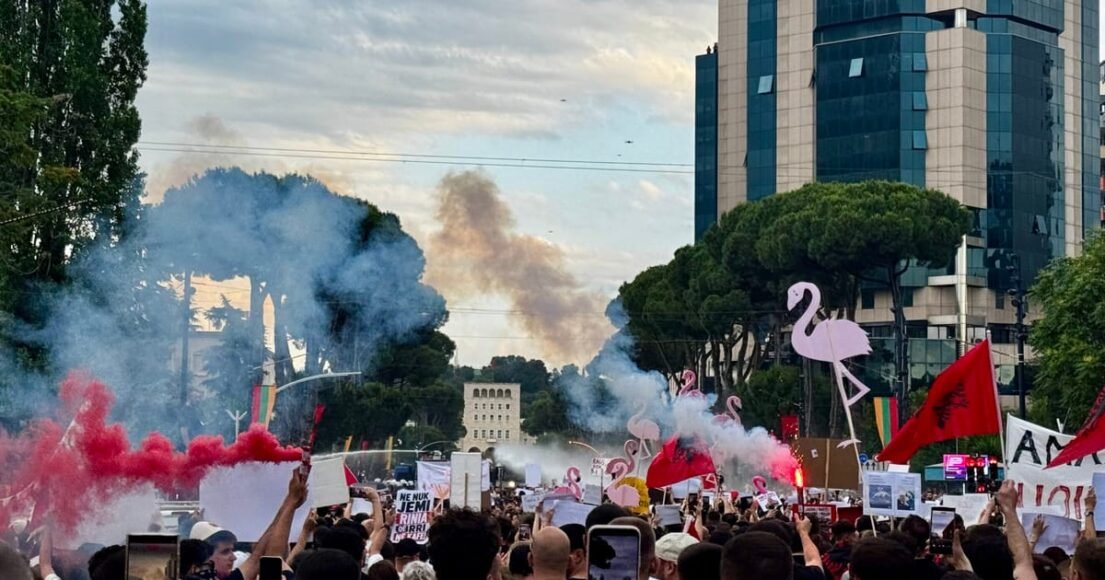
”Authorities and decision-makers must guarantee the right to peaceful protest. The rule of law and respect for free assembly and expression are non-negotiable. They are fundamental pillars, supported by an active civil society and a free press. Without these, a democratic and free society cannot thrive,” asserted Vadeful. He added that Germany and the EU are prepared to partner with Serbia on its EU path to facilitate progress.
”A dialogue on normalizing relations with Kosovo, under EU guidance, is imperative. The Ohrid Agreement is binding and must be honored by both Serbia and Kosovo. The Berlin Process serves as a crucial catalyst for EU integration, and I am glad that Serbia is actively participating. I assure you that the Federal Government will continue to play an important role in this process. Achieving tangible progress is now vital,” Vadeful assessed.
He underscored that the mobility agreements established in the Western Balkans in recent years must be executed, ensuring complete freedom of movement, unhindered access to higher education, recognition of diplomas, and the creation of a common regional market.
“In essence, it is about making tangible advancements for the people living here. Real rapprochement will only occur when trust grows





Leave a Reply