


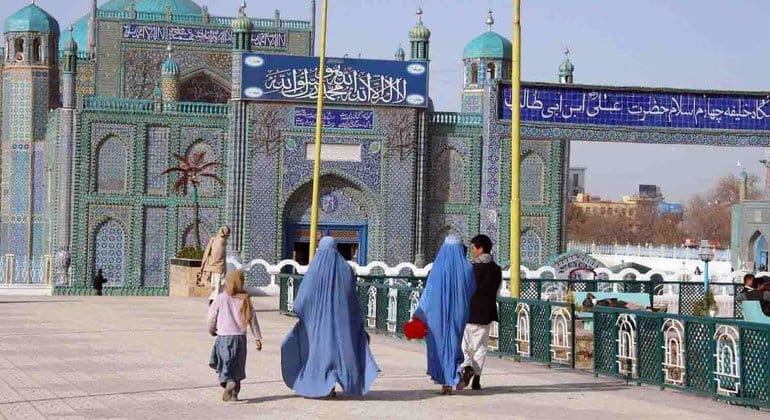
Dr. Tedros Adhanom Ghebreyesus, head of the World Health Organization (WHO), announced that UN agency first responders were “on the ground” to aid the injured. The UN World Food Programme (WFP) emphasized its support for affected communities and emergency response as needs assessments began. An earthquake struck near Mazar-i-Sharif around 1am local time, causing buildings to collapse on people sleeping inside. Footage from the Shrine of Hazrat Ali showed rubble on the ground. Despite reports of casualties in Samangan, initial aerial assessments revealed less damage than feared. A UN flyover, aided by Swiss authorities, showed no mass displacement expected from a more destructive earthquake.
“We went over the main populated areas in the earthquake affected zone. Thankfully, we saw very little widespread devastation…compared to the scenes in Kunar weeks ago,” said Richard Trenchard, UN’s acting Humanitarian Coordinator in Afghanistan.
The crisis follows an August 31 magnitude 6.0 earthquake in Kunar province, destroying thousands of homes and infrastructure, displacing hundreds of thousands, and leaving half a million needing urgent medical aid.
“What began as an acute emergency has now evolved into a displacement crisis, where families endure prolonged stays in temporary settlements amid rising health risks,” WHO said.
Additionally, displaced families face lack of safe drinking water, widespread open defecation, and poor health services for women due to “absence of female staff and lack of privacy.”
WHO noted critical maternal and newborn health needs, along with deep aid funding cuts affecting immunization, noncommunicable disease management, and psychosocial support.
In Afghanistan, collaboration and local leadership are vital to recovery. Efforts focus on pre-positioning supplies, mobilizing surveillance teams to prevent disease outbreaks, and preparing hospitals to resume operations.










Leave a Reply