



The practice of Arabic-Islamic summits has historically provided an important venue for coordination and unity among Member States of the League of Arab States and countries of the broader Organisation of Islamic Cooperation (OIC). Since the organization’s first summit in 1964, and following the formation of the OIC in 1969, these summits have been instrumental in addressing regional disputes, enhancing cooperation in economic, cultural, political, and security matters, and producing injured statements of collective action to overcome threats and challenges facing the Muslim world. Previous summits, including the 2023 and 2024 extraordinary joint arab-islamic summits, discussed issues around the increasing tensions of the Israeli-Palestinian conflict, humanitarian crises in Gaza, and regional security issues.
The series of extraordinary summits are constituted by the urgent plight of emerging geopolitical crises outside the scope of normal meetings. The 2023 summit was largely about the hostilities ongoing in Gaza, producing declarations that called for ceasefires and unity in defending Palestinian rights, the same for the 2024 summit which produced declarations citing norms for humanitarian advocacy and increased civilian casualties. The prior summits established expectations for urgent and rapid collective action or formal condemnation against acts seen as reckless against sovereignty and international law.
Background and context leading to the 2025 Summit
The 2025 Arab–Islamic extraordinary summit, held on September 15, 2025, in Doha, Qatar, was convened as an urgent response to a series of events that escalated regional tensions to a critical point. The immediate trigger was an Israeli airstrike on September 9, 2025, targeting a Hamas leadership meeting in Doha, which resulted in the deaths of five Hamas members and a Qatari security officer. This unprecedented strike inside Qatari territory, occurring amid ongoing U.S.-brokered ceasefire negotiations, was condemned by Qatar as a violation of national sovereignty and international law, characterizing the attack as “state terrorism.”
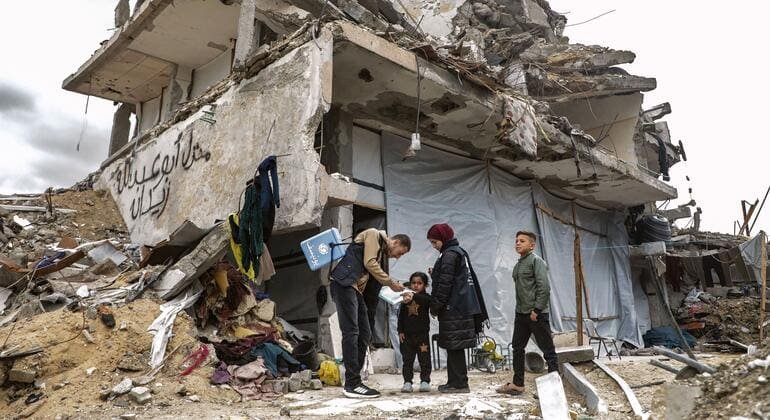
This intense escalation highlighted ruptures in the regional security framework and called into question the credibility of long-standing security partners like the U.S. As the U.S. was unable to stop Israeli incursions into Qatari airspace, the Gulf States started to rethink their diplomatic and defense frameworks and increasingly began contemplating alternative partnerships, including an eye toward greater cooperation with China and Turkey. The attack also shed light on the broader humanitarian and security crises originally brought about by Israel’s military onslaught of Gaza, the continuing expansion of settlements in the occupied West Bank, and forced displacement of Palestinians.
In this tense backdrop, Arab and Islamic states faced increasing pressure to confront a united response to what was seen as aggressive Israeli actions undermining peace and stability. It is in this context that Emir Sheikh Tamim bin Hamad Al Thani called for the Doha summit to organize collective regional and global responses, demonstrate solidarity to Qatar, and discuss the geopolitical impact of both the Gaza conflict and Israeli policies.
Summit participation and declarations
The 2025 summit attracted an unprecedented gathering of over 50 leaders from Arab League countries and OIC member states, reflecting the gravity of the situation and the desire for unified action. Notable participants included Iran’s President Masoud Pezeshkian, Iraqi Prime Minister Mohammed Shia al-Sudani, Turkey’s President Recep Tayyip Erdoğan, Palestinian President Mahmoud Abbas, King Abdullah II of Jordan, and Egyptian President Abdel Fattah el-Sisi. High-ranking delegates from Gulf Cooperation Council (GCC) countries, including the UAE and Saudi Arabia, also attended, demonstrating regional consensus despite differing geopolitical interests.
The summit commenced with comments from Emir Tamim bin Hamad Al Thani, who criticized Israel’s actions as attempts to








Leave a Reply