



German Chancellor Friedrich Merz stated at a Brussels conference that EU law permits the implementation of border controls, and Germany is exercising this right. He emphasized that Germany does not wish to leave the security of the EU’s external borders solely to the countries that share these borders.
“I strongly support the European single market and the Schengen area, and I want to communicate this to all European leaders who may be worried about the escalating situation: we do not aim to restrict cross-border movement or impose any barriers. The Schengen area is a significant asset, and we aim to preserve it,” he remarked.
Merz also referenced the EU’s Dublin Regulation, which stipulates that asylum applications must be filed in the country of entry, a scenario that “generally speaking, rarely involves Germany.”
“Therefore, seeking asylum at the European Schengen border, in accordance with either European or German asylum law, should not be feasible. The previous government had already begun implementing measures to return individuals,” he added.
He noted that he had discussions with Polish Prime Minister Donald Tusk in Warsaw, making it clear that Germany is not willing to leave the security of the external European borders solely to the countries that share them.
“This isn’t just about Poland’s external borders or those of other member states. These are the external borders of Europe that we, as Germans—who only share an external border with Switzerland—must support. We are prepared to address this challenge head-on,” he stated.
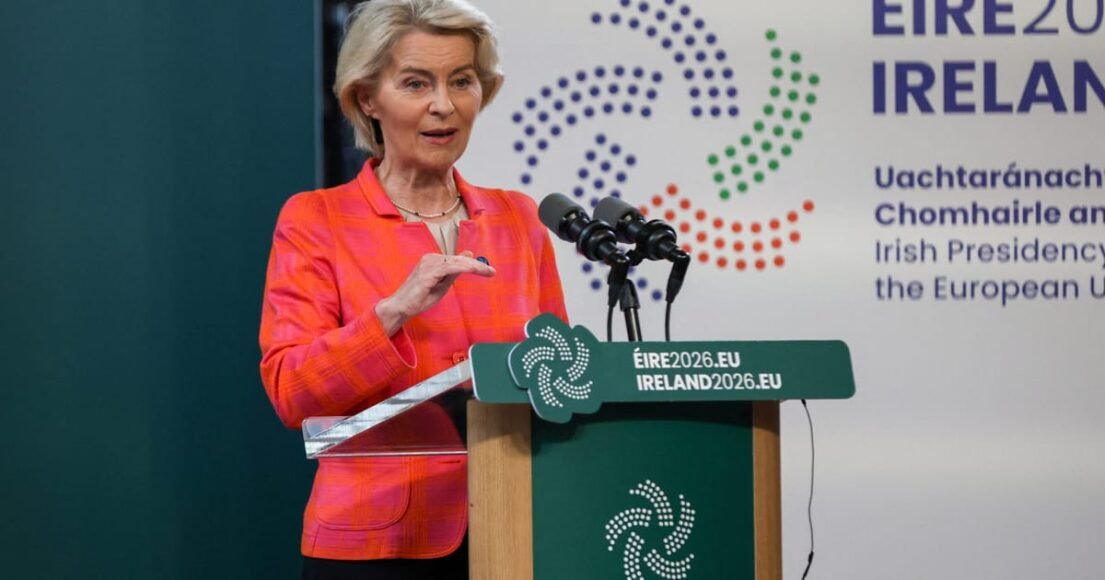
European Commission President Ursula von der Leyen, speaking at the conference, affirmed that while member states can impose border controls at their internal borders, such measures must be temporary.
“A key requirement is strict coordination with the Commission. Just yesterday, the Commissioner for Migration, Magnus Brunner, held a phone conversation with the German Interior Minister. This coordination must also extend to neighboring countries, and as I understand, Germany is actively engaging in discussions with its neighbors about these issues,” she explained.
On Wednesday, German Interior Minister Alexander Dobrindt announced that all illegal migrants would be turned back at the borders, even if they seek asylum. He stated that border controls would be strengthened, with an increase in the number of border officers.
The Dublin Regulation defines which EU member state is responsible for processing an asylum application from a third-country national. (09.05.2025)









Leave a Reply