


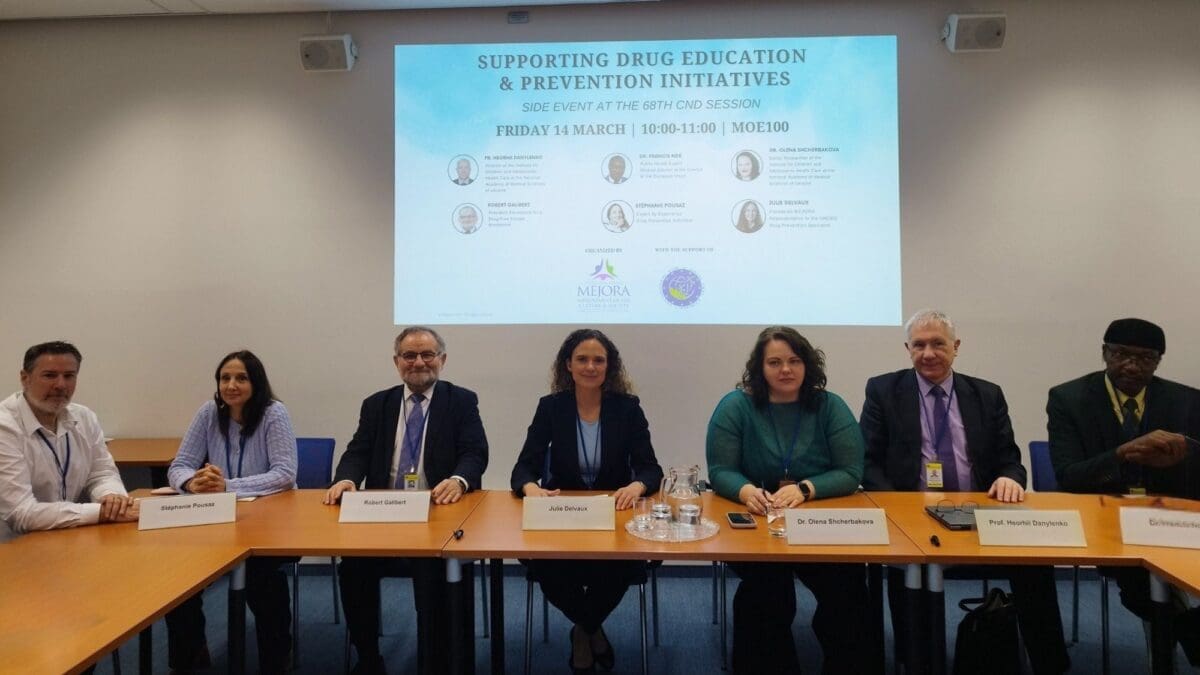
Experts Highlight the Dangers of Drug Use at CND68 in Vienna
At the 68th session of the Commission on Narcotic Drugs (CND68) in Vienna, a key side event titled Supporting Drug Education and Prevention Initiatives gathered experts, policymakers, and former drug users to discuss the critical need for prevention efforts against substance abuse. The event was organized by the Fundación para la Mejora de la Vida, la Cultura y la Sociedad (Foundation for the Improvement of Life, Culture, and Society), an international organization addressing societal issues through education and advocacy, with a significant focus on drug prevention. It was co-hosted in collaboration with the Foundation for a Drug-Free Europe (FDFE), a network of over 100 grassroots groups across Europe engaged in direct awareness efforts through The Truth About Drugs campaign.
Urgent Global Action Needed
The event emphasized the increasing dangers of drug abuse, which continues to harm communities worldwide.
Julie Delvaux, a representative from the UN Office on Drugs and Crime (UNODC) and ECOSOC, set the tone for the discussion, highlighting the necessity of early intervention:
*“The earlier we act, the more lives we can save, and the more we can reduce the harm being caused by drugs.”*
She pointed out that drug abuse isn’t just a public health issue—it also impacts crime rates, economic stability, and mental health. As millions are affected globally, prevention remains the most effective long-term strategy.
The session featured a diverse group of speakers, including scientists and former drug users, all advocating for strong educational initiatives to increase awareness of drug-related dangers. Their insights reinforced the urgent need for policies that prevent initial drug use, rather than focusing solely on addiction treatment after dependence has set in.
—
The Threat of Synthetic Cannabinoids
Robert Galibert, President of the Foundation for a Drug-Free Europe and an expert in biochemistry, detailed the dangers of synthetic cannabinoids, which have become a major threat in drug markets worldwide.
*“These substances are far more potent and dangerous than natural cannabis.”*
He explained how synthetic cannabinoids, originally developed for medical research, were exploited by illicit manufacturers to bypass legal restrictions, leading to severe health complications such as heart issues, vomiting, hallucinations, and even fatal overdoses.
Galibert highlighted how these chemicals disrupt the body’s endocannabinoid system, which regulates mood, memory, and physiological balance. Unlike natural cannabis compounds, synthetic cannabinoids bind to receptors far more aggressively, causing extreme and unpredictable effects.
He also underscored the fat solubility of cannabis-related substances, meaning that THC remains in the body for weeks, leading to prolonged impairment:
*“Alcohol is eliminated in 24 hours, but THC—whether from phyto- or synthetic cannabinoids—stays in fat tissue for weeks, making its effects long-lasting and underestimated.”*
This finding is particularly relevant in ongoing debates about cannabis legalization, countering the misconception that marijuana is a harmless drug with short-lived effects.
—
A Former Addict’s Testimony: The Real Impact of Drug Use
One of the most powerful moments came from Stephanie, a former drug user from Switzerland, who shared her journey from casual cannabis use to LSD, cocaine, heroin, and methadone addiction.
She recounted how peer pressure played a role in her initial drug use:
*“At first, I didn’t want to join in. But over time, I felt isolated. So, I gave in.”*
Her experience highlights the social normalization of drug use, where what starts as a seemingly inconsequential decision can develop into a devastating dependency.
Eventually, she found herself destitute, homeless, and suffering from severe withdrawal symptoms. It was at this low point that she realized she needed to change. After multiple rehabilitation attempts, she successfully overcame addiction and now runs a company employing 30 people.
Stephanie stressed that early drug education could have helped her avoid addiction, and she urged policymakers to implement prevention programs in schools to equip young people with the knowledge to resist peer pressure.
—
Scientific and Policy Debates on Cannabis
Health Risks Linked to Cannabis Use
Dr. Francis Nde, medical advisor to the Council of the European Union, presented research on the serious health risks associated with cannabis consumption, including links to testicular cancer, cardiovascular disease, and mental disorders like schizophrenia.
*“The effects of cannabis are not just short-term; they are passed down through generations,”* he warned, referring to recent findings on **epigenetics**—the way environmental factors, including drug use, can influence











Leave a Reply