


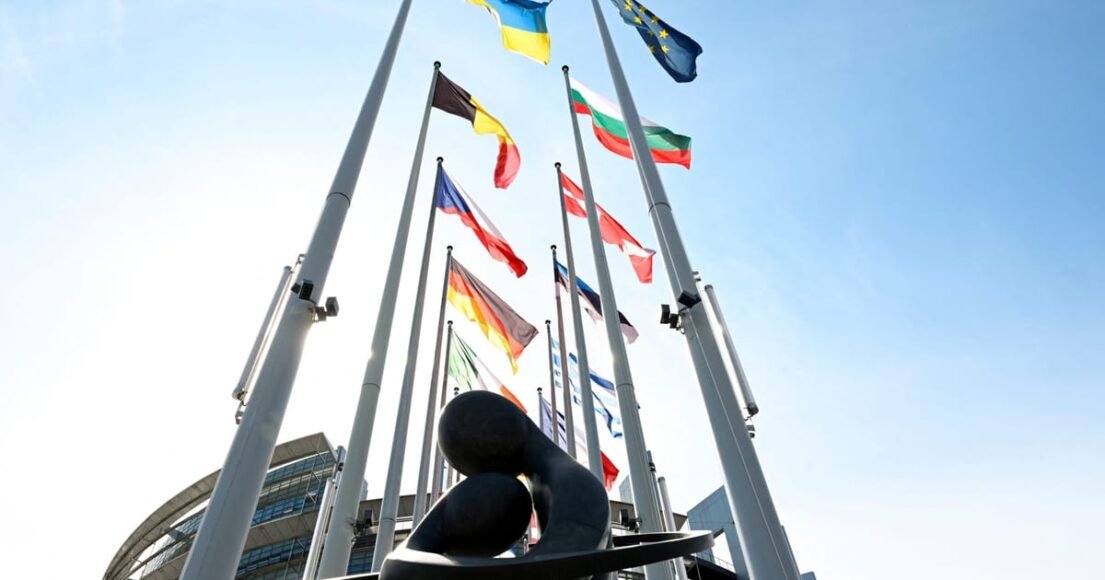
Strasbourg (Eurotoday) – MEPs debated the 2025 European Semester for economic policy coordination with Vice President of the Commission Minzatu and Polish Minister Szlapka for the Council. Concerns over a sudden increase in defence investments were addressed.
The debate began with a presentation by MEPs Navarrete Rojas and Abadía Jover—both from the EPP Group and members of the Spanish Partido Popular—on their report regarding the 2025 European Semester, the Commission’s plan to coordinate economic and social policies across member states.
Given the EU’s new and significant commitment to increasing investments in defence, concerns have been raised in recent weeks about the potential exclusion of defence spending from fiscal rules and its impact on member states’ economies and societies.
The report: we need “sustainable growth”
The Parliament’s report emphasized the need to turn structural fiscal commitments into tangible action as soon as possible and ensure that the European fiscal rule remains “credible” for small businesses.
It advocates for strong and responsible fiscal policies that must be strict enough to meet necessary demands while also fostering economic growth.
The report also highlights the housing crisis, calling for increased supply, reduced red tape, and more investment in the social economy.
**”Europeans shouldn’t have to leave home to seek opportunities,”**
said MEP Abadía Jover.
No to defence expenditure at the cost of the people
Some MEPs raised concerns about rising military spending that could overshadow social policies and neglect the fundamental needs of European citizens.
**”Suddenly there are billions of euros for defence spending but nothing for hospitals, schools, or the environment. Suddenly there is no global warming, no poverty, and all we need is missiles. What you are preparing is a social war,”**
said MEP Manon Aubry from The Left group.
EU Commission Vice President Minzatu addressed these concerns in her closing remarks, stating that fiscal sustainability and social convergence are being equally considered and that economic policy coordination is more crucial than ever in an uncertain geopolitical landscape.
Geopolitical uncertainty
In his opening remarks, Polish Minister Szlapka for the Council noted that, although the labour market remains resilient and the service sector is expanding, Europe‘s recovery has been slow, partly due to geopolitical uncertainties.
Currently, the United States is imposing a 25% tariff on steel and aluminium imports, and the EU Commission has announced countermeasures in response.
MEPs are set to vote on the 2025 European Semester for economic policy coordination later today.
—
Eurotoday is a daily online newspaper providing independent coverage of international and European affairs. With a Europe-wide perspective, Eurotoday reports on EU policies and politics, major developments in member states, and the global agenda through a European lens.

Leave a Reply