


The European Union has been sidelined in peace talks by Russia and the US regarding what it calls Russia’s full-scale invasion of Ukraine, the largest European war since World War II. As it struggles to make its voice heard in a war on European soil, can the EU position itself as a mediator in the Middle East?
On Wednesday, the European Parliament hosted a conference, Wars in the Middle East: Challenges and Prospects for Mediation and Peace, organized by Gaetano Pedullà, a Member of the European Parliament (MEP) from the 5 Star Movement. The event gathered diplomats, academics, and policymakers to discuss the EU’s role in conflict resolution in the Middle East. With ongoing violence in Gaza, the debate among speakers revolved around the European Union’s diplomatic limitations, its humanitarian commitments, and whether the EU can act independently from the US in mediation efforts.
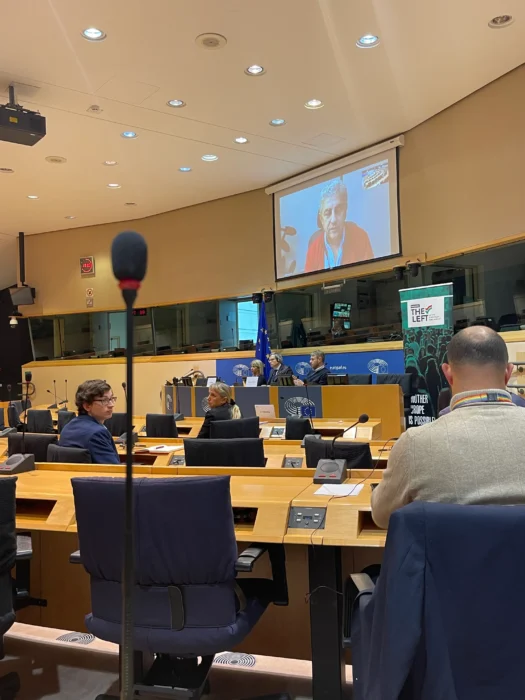
Among the key speakers were Carolina Morace, who introduced the event; Flavio Lotti, President of Fondazione Marcia PerugiAssisi per una Cultura di Pace; Sultan Barakat, professor and expert on Middle Eastern affairs; Luisa Morgantini, President of AssopacePalestina and former Vice-President of the European Parliament; Elena Yoncheva, MEP; Stefania Ascari, Italian MP and Coordinator of the Peace Intergroup; Danilo Della Valle, MEP; and Gaetano Pedullà, MEP and organizer of the event.
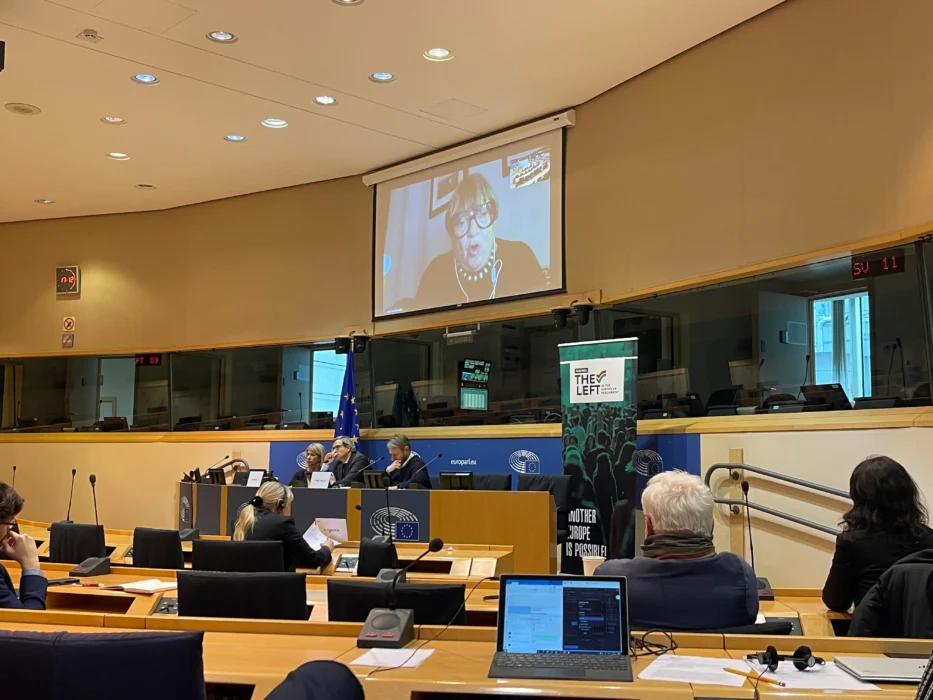
The discussion painted a grim picture of the EU’s political irrelevance and failure to act decisively, from blocked aid convoys to Israel’s unchecked military actions. The speakers highlighted that the EU must decide whether it wants to be a passive observer or an active player in shaping peace in the Middle East.
Luisa Morgantini, President of AssopacePalestina, stated:
*”The EU is an accomplice to the genocide. We fund Israel’s military occupation, yet we take no political action.”*
Evaluating current and future geopolitics, MEP Danilo Della Valle voiced concerns about the EU’s diminishing influence:
*”The EU has become too polite when it comes to difficult issues. We are being sidelined in global geopolitics, allowing Trump and Putin to dictate the narrative.”*
Stefania Ascari, who was on the Rafah border when the crisis unfolded, described the humanitarian crisis:
*”More than 500 trucks filled with life-saving supplies were stuck in the Sinai Desert, unable to reach starving civilians. We saw with our own eyes the suffering.”*
Eurotoday spoke with the organizer of the conference, MEP Gaetano Pedullà, during the event to gain detailed insight into the direction of the EU’s foreign policy and whether it is shifting towards a more independent diplomatic role in the Middle East. Pedullà highlighted the deep divisions within the European Parliament and the unclear direction of US policy in the region.

When asked if the EU is shifting towards a stronger diplomatic role in the Middle East, Pedullà was clear in his response:
*”No, no, we continue. There is a big problem. Many in the European Parliament still believe war is the solution and do not support diplomacy or stopping the war.”*
He explained that many European politicians remain focused on supporting Ukraine and President Zelensky, disregarding wider geopolitical consequences, while the US shifts its focus under Trump.
A member of the Five Star Movement, Pedullà emphasized the significance of a more diplomatic and strategic European approach:
*”The problem is not just the current situation but also the future. Is a two-state solution the right answer? Maybe. But what happens if Palestine’s leadership remains unchanged? Without leadership reform, Hamas and other groups will continue to be seen as terrorist organizations, making peace even harder to achieve.”*
Eurotoday also asked whether the MEP expects the EU to act independently from the US regarding its foreign policy in the Middle East.
Pedullà acknowledged the historical ties between the US and the EU but suggested that the situation remains uncertain due to Trump’s unclear position:
*”We have to wait and see




Leave a Reply