Dogmatics as the Interpretation of Scripture

Dogmatics as an Interpretation of the Bible

Author: His Eminence John Zizioulas, Metropolitan of Pergamum

The issue of hermeneutics is crucial not only for dogmas but also for the Bible itself. Essentially, they present the same challenge. Without interpretation, the Bible remains a lifeless text, just as dogmas become mere historical artifacts if they are not continuously interpreted. In fact, dogmas are themselves an interpretation of the Bible.

The Two Aspects of Interpretation

Interpreting dogmas or Scripture involves two key aspects:

A) Understanding the Historical Context

To interpret dogmas or the Bible correctly, one must first understand the historical circumstances in which they were formulated. This requires answering key questions:

– What challenges did the Church face at that particular time?
– What traditions—written or oral—were available to address these challenges? Each council took previous tradition into account.
– What vocabulary and philosophical concepts were used in that historical and cultural context? For instance, the term consubstantial (ομοούσιος), central in the 4th century, does not appear in the New Testament. Later centuries introduced different theological concepts.
– What spiritual experiences—such as worship practices, ascetic traditions, or theological disputes—shaped the formulation of dogma (e.g., New Testament testimony, the veneration of icons in the Seventh Ecumenical Council, or hesychasm)?

A sound historical foundation is essential for interpretation, as misinterpretation arises when historical realities are misunderstood. Just as one cannot interpret Scripture without an accurate historical study, the same applies to dogmas. A good theologian must also be a competent historian.

B) Addressing Contemporary Issues

Secondly, interpretation must relate to the present:

– Identifying new heresies or fundamental questions impacting humanity, including issues related to technology, ecology, or modern religious movements (e.g., Jehovah’s Witnesses).
– Understanding the terminology and philosophical categories used today. The Church Fathers were contemporaries of their time and did not rigidly adhere to the wording of the New Testament; rather, they introduced terms like consubstantial to express dogmatic truth.
– Recognizing how the Church’s liturgical and ascetic life, while retaining its essence, has evolved in form and emphasis. For instance, martyrdom in the early Church, hesychastic prayer, or the influence of monastic practices on public worship have shaped theological interpretation over time.

A good theologian should not only be an accomplished historian but also have philosophical insight and pastoral sensitivity. Understanding contemporary philosophy, engaging with the real concerns of people, and knowing the Church’s liturgical and canonical life are all essential in interpreting dogma. Since no single person can master every field, theologians must stay informed about the latest scholarly research.

The Relationship Between Dogmas and Scripture

The relationship between dogma and Scripture is fundamentally hermeneutical.

Following the Reformation, Western theologians debated whether divine revelation had one or two sources—Scripture alone (sola scriptura, as the Protestants insisted) or Scripture along with Church Tradition (as the Roman Catholics maintained). This debate entered Orthodox theology through the “Orthodox Confessions” of the 16th century, whose answers varied depending on Western theological influences (e.g., Peter Mogila inclined toward Catholicism, while Cyril Lucaris leaned toward Calvinism).

However, Orthodoxy differs from the West in two crucial ways:

1. Revelation Is Personal, Not Merely Rational
In Orthodox tradition, revelation is always personal—God revealed Himself to Abraham, Moses, the Apostles, and the Church Fathers. Therefore, the idea of “new revelations” or additions to revelation (as in John Henry Newman’s theory of developing doctrine) does not apply.

2. Truth Is a Relationship, Not Merely Propositional Knowledge
In the West, Scripture and Church doctrine have often been objectified as “repositories” of truth. In Orthodoxy, however, both Scripture and the Church serve as witnesses to the existential experience of truth. Truth is not simply about logical statements but about relationships—between God, humanity, and creation.

For example, knowledge of the Trinity is not merely intellectual; it is existential. One does not truly know the Trinity by merely accepting that God is triune but by participating in the life of the Triune God. A simple believer, through life in the Church, may “know” and experience the Trinity more deeply than a scholar who studies it merely intellectually.

Revelation as a Personal Encounter

If revelation is primarily an existential and relational experience, then the Scriptures, which testify to this revelation, contain the full essence of divine revelation. However, the manner of revelation has differed throughout history:

– In the Old


Comments

Leave a Reply

Your email address will not be published. Required fields are marked *

Last News

EU Clears Hungary’s €10bn Recovery Plan

EU Clears Hungary’s €10bn Recovery Plan

The Council of the European Union has granted approval to Hungary’s adjusted recovery and resilience plan, enabling access to up to €10 billion in EU funds but maintaining payments conditional on achieving reforms and investment goals. This decision provides financial opportunities for Budapest while emphasizing rule-of-law implementation, public-procurement transparency, and judicial indep

Read More

Why UK Entrepreneurs Are Opting for Limited Companies Instead of Sole Traders

Why UK Entrepreneurs Are Opting for Limited Companies Instead of Sole Traders

London, July 10, Eurotoday Newspaper – Start a limited company UK has become an increasingly popular choice as more entrepreneurs opt for incorporation instead of registering as sole traders. Business advisers say founders are seeking stronger legal protection, improved credibility, and better opportunities for long-term growth as new businesses launch across the country.
Business Formation Tren

Read More

Moldova Appoints Businessman as New PM Nominee

Moldova Appoints Businessman as New PM Nominee

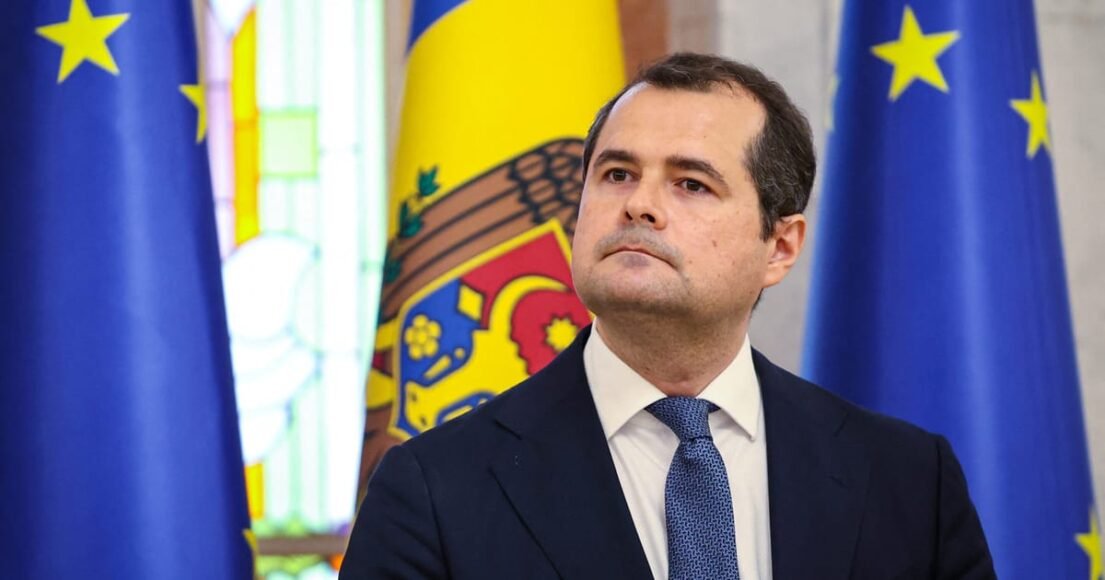
Tofan expressed his intention for Moldova to sign an EU ascension treaty by the end of 2028, responding to journalists’ inquiries about the matter. The former prime minister, Munteanu, stepped down earlier this month, stating his inability to continue fulfilling his mandate in line with his principles. The administration had been troubled by multiple scandals, notably the arrest of a state s

Read More

Spain Keeps Their Nerve as Belgium Exits

Spain Keeps Their Nerve as Belgium Exits

A 2-1 quarter-final victory propels Spain towards a semi-final clash with France, bringing another golden era chapter to a close for Belgium.
By Daniel Mercer, Sports Correspondent, The European Times
Spain secured their place in the FIFA World Cup semi-finals with a 2-1 win over Belgium in Los Angeles, characterized more by composure during critical moments than sheer dominance. Goals from Fabia

Read More

New Compliance Requirements from Companies House Every Business Owner Must Know

New Compliance Requirements from Companies House Every Business Owner Must Know

Sarhan Basem is Eurotoday’s Senior Correspondent to the European Parliament. With a Bachelor’s degree in English Literature, Sarhan brings a unique blend of linguistic finesse and analytical prowess to his reporting. Specializing in foreign affairs, human rights, civil liberties, and security issues, he delves deep into the intricacies of global politics to provide insightful comment

Read More

A Walk with Patrick Schnieder

A Walk with Patrick Schnieder

Seit einem Jahr ist Patrick Schnieder als Verkehrsminister im Amt. Im Gespräch mit Gordon Repinski verteidigt er die Vollsperrungen bei den Korridorsanierungen der Bahn, gibt jedoch zu, dass es konzeptionellen Nachbesserungsbedarf gibt. Beim autonomen Fahren verspricht Schnieder baldige Fortschritte auf dem deutschen Markt. Bereits Ende des Jahres oder Anfang des nächsten sollen erste hochautomat

Read More

What is the purpose of jagged edges on coins?

What is the purpose of jagged edges on coins?

Coins with jagged edges aren’t just a design choice; they serve as a clever anti-theft measure from the past. This practice, still in use today, was developed to deter thieves when the metal value of coins matched their denomination. Coins like the early American dollars contained substantial silver, leading fraudsters to shave off small amounts. The creation of serrated edges made such tam

Read More

How Long to Register a UK Company: Timeline, Costs, and Common Delays

How Long to Register a UK Company: Timeline, Costs, and Common Delays

London, July 10, Eurotoday Newspaper – UK company registration timeline is drawing increased attention as thousands of entrepreneurs continue launching new businesses across Britain. Companies House says most online applications are processed within one working day, but registration times can vary depending on filing accuracy, verification requirements, and the method used to submit incorporatio

Read More

Eurozone Budgets Warned of Energy Shock

Eurozone Budgets Warned of Energy Shock

Finance ministers emphasize targeted support amid rising inflation, debt, and investment challenges.
Euro-area governments are being cautioned against broad spending in response to escalating energy costs, as finance ministers aim to support vulnerable households and businesses without undermining public finances. This warning follows the Eurogroup meeting and precedes EU finance ministers’ talks

Read More

Berlin Mayor Withdraws from Reelection Over Blackout Falsehood

Berlin Mayor Withdraws from Reelection Over Blackout Falsehood

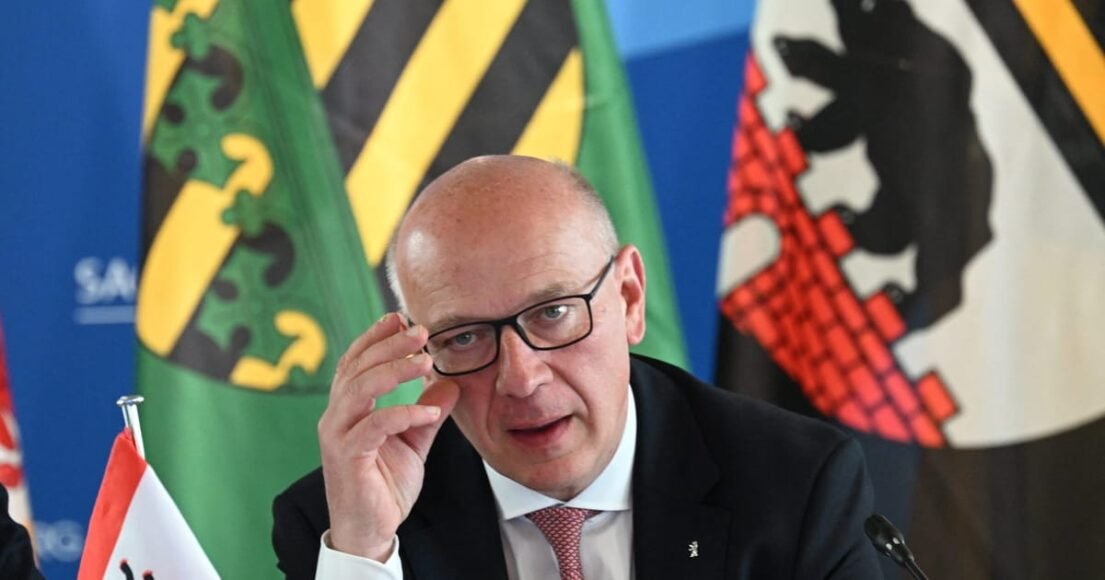
Wegner’s conservative Christian Democratic Union (CDU) secured 28.2 percent of the votes in Berlin’s snap election in February 2023, following a Constitutional Court order to rerun the 2021 vote due to irregularities.
Since then, the party’s support in Berlin has fallen to 17 percent, reflecting a broader national trend. The CDU has lost standing to the far-right Alternative for German

Read More