


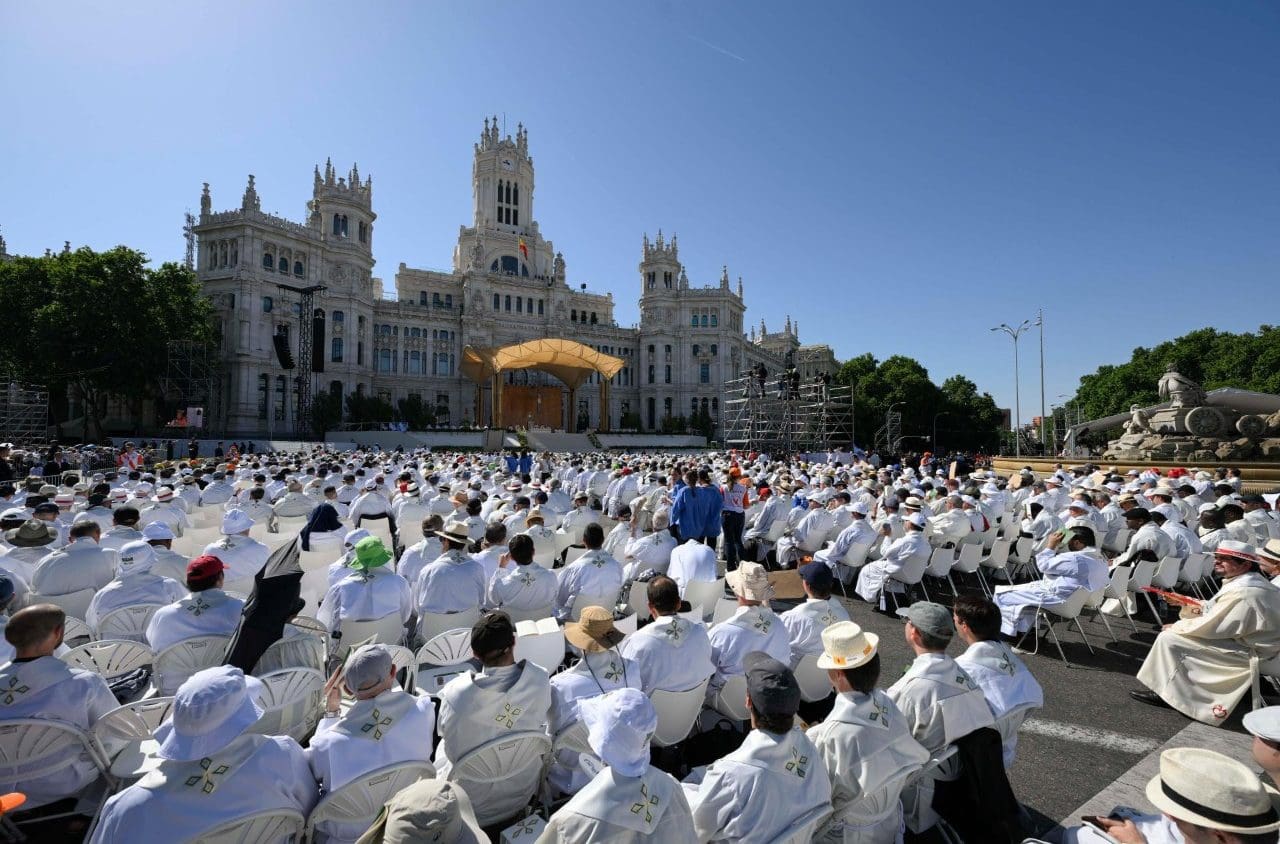
Pope Leo XIV’s first visit to Spain has captured significant public attention, spotlighting polarization, religious freedom, abuse accountability, and migration within a broader European dialogue on dignity and civic trust.
A Papal Visit with Political Weight
Pope Leo XIV commenced a 6-12 June apostolic journey in Spain, traveling from Madrid to Barcelona and the Canary Islands, as outlined in the Vatican’s official program. This marks the first papal visit to Spain in 15 years, occurring amid ideological tensions, declining religious practice, and ongoing scrutiny of the Catholic Church’s handling of abuse.
On Sunday, large crowds gathered in Madrid for a Corpus Christi Mass and procession, highlighting the visit’s public prominence. However, the Pope focused less on religious spectacle and more on fostering dialogue in Spain and Europe without eliminating disagreements.
Dialogue, Conscience, and Dignity
In Madrid, Leo XIV addressed Spanish authorities and diplomats, urging them to foster civic friendship, protect freedom of conscience, and resist divisive narratives. He called for Spain to “advance the cause of unity in Europe,” cautioning against political habits that exaggerate polarization and simplify complex histories.
This message carries a broader European significance. Spain is not alone in facing debates on identity, migration, secularism, regional autonomy, and institutional trust. Across the continent, leaders and civil-society groups struggle to defend pluralism without allowing democratic debate to become permanently hostile.
The Pope’s message aligns with his broader concern for human dignity. The European Times previously highlighted Leo XIV’s Vatican efforts on human dignity in the age of artificial intelligence, a theme echoed in Madrid through his warnings on technology, education, and critical thought.
Accountability Cannot Be Secondary
The visit occurs amid the Church’s credibility crisis. Spanish institutions and Catholic authorities face pressure over clerical sexual abuse, including transparency, compensation, and survivor recognition. Any call for reconciliation must include those harmed by religious institutions, not just their adherents.
Accountability is central to the visit’s meaning. Reconciliation cannot be limited to political civility but must involve truth, remedy, and institutional responsibility for rights violations.
Migration and Europe’s Moral Border
The final part of the Pope’s journey focuses on the Canary Islands, a key migration frontier. The route from West Africa to Spain highlights the dangers of limited safe pathways, fragile rescue capacity, and political debates that often exclude migrant voices.
The visit’s coverage notes the Pope will address abuse accountability and migration, including Spain’s recent efforts to regularize undocumented workers, as reported by Euronews. This positions the Pope’s words on dignity alongside one of Europe’s toughest policy challenges: ensuring border management aligns with human rights, family life, and protection for those fleeing hardship or danger.
For Spain, the visit is a moment of religious and civic visibility. For Europe, it underscores that public peace requires more than conflict absence; it hinges on safeguarding conscience, confronting institutional harm, and treating vulnerable individuals as rights bearers rather than political symbols.






Leave a Reply